On the darkest night of the lunar month, millions of small flames are lit. Here is what Diwali means for the body, the mind and the spirit, seen through the season, psychology, physics, the Yoga Sutras, the Bhagavad Gita and the Iyengar tradition.
On the darkest night of the lunar month, millions of small flames are lit. Windows glow, courtyards fill with colour, and for a few days an entire country seems to turn toward the light. Diwali is easy to enjoy and hard to explain, because it holds so many layers at once: a story, a season, a psychology, a science and a spiritual teaching. B.K.S. Iyengar named some of his best-known books Light on Yoga, Light on Pranayama and Light on Life, and it is no accident that yoga so often reaches for the image of light. Let us look at Diwali from each side, one by one.
In Short
- Diwali falls on the new moon night in autumn and is celebrated over five days. Its central image is a lamp lit against darkness.
- Different traditions tell different stories, but all of them speak of light overcoming darkness.
- Seasonal change, light, cleaning, ritual and togetherness each have real effects on the body and mind.
- Physics can describe light but cannot prove spiritual teachings. The two can still inspire each other as metaphor.
- The Yoga Sutras, the Bhagavad Gita and the Upanishads all treat ignorance as darkness and knowledge as light.
- The yogic way of celebrating is simple: clean, calm, grateful, kind and quiet.
The Story and the Five Days
Diwali, or Deepavali, means a row of lamps. It is celebrated over five days. Dhanteras begins the festival with health and prosperity. Naraka Chaturdashi, or Choti Diwali, remembers the defeat of the demon Narakasura. The main night is Lakshmi Puja, when homes are lit and the goddess of well-being is welcomed. Govardhan Puja recalls Krishna lifting a hill to protect his people, and Bhai Dooj honours the bond between siblings.
Many families link the festival to the return of Rama to Ayodhya after exile, when the city lit lamps to welcome him. In other traditions the same days carry other meanings. Jains remember the liberation of Mahavira, and Sikhs observe Bandi Chhor Divas, remembering the release of Guru Hargobind. Some Buddhist communities in Nepal celebrate related festivals too. The stories differ, yet the thread is shared: light, freedom and renewal.
The Science of Season, Light and the Body
Diwali comes in autumn, when days grow shorter and the weather turns cooler and drier. This is a time when the body and mind quietly shift gears.
- Light and mood. Light exposure helps regulate our sleep and wake cycle, and many people feel lower as daylight reduces. Bright, warm gatherings in the evenings, lamps and company can lift the spirit in a real way.
- A clean home. The tradition of cleaning before Diwali clears dust and clutter. A tidy space is easier on the breath and the mind.
- Ayurveda and the season. Ayurveda sees this as a period of transition when digestion can become irregular and dryness increases. Traditional advice includes warm, cooked, easily digested food, moderate use of ghee and a warm oil massage before bathing, which is the custom of abhyanga on Choti Diwali.
- Sweets in moderation. Festive food is part of the joy, but heavy, sugary meals day after day can leave the body sluggish. A little at a time is the wiser path.
An honest word also needs saying. Lamps and especially fireworks put smoke and particles into the air. Fireworks are known to worsen air quality, and they are hard on people with asthma, on the elderly and on animals. The traditional belief that lamps purify the air is not supported by science, so please keep the room ventilated when many lamps are burning. A quieter, cleaner Diwali is also a more yogic one.
The Psychology of Lights and Rituals
Psychologists have long observed that rituals give people a sense of meaning and steadiness. Diwali offers a rich set of them: cleaning, lighting lamps, decorating, gifting, eating together. Several parts of this are good for the mind.
- A fresh start. Cleaning and new clothes mark a threshold. Many people find it easier to begin again when the calendar gives them a clear moment to do so.
- Gratitude. Lakshmi Puja is, at its heart, an act of thanks for what one already has. Gratitude is one of the better-studied habits for lasting wellbeing.
- Connection. Shared meals and visits remind us that we belong to something. Strong social bonds are among the most reliable supports for mental health.
- Hope. A lit lamp is a simple, visible promise that the dark will not last.
It is also fair to say that festivals can bring stress: overspending, family pressure, loneliness for those who are far from home. If Diwali is hard for you, keep it small and gentle. A single lamp and a few quiet minutes are enough. If the season tends to unsettle you, you may also find our articles on yoga for anxiety and yoga for depression and heartbreak helpful.
What Physics Can Say, and What It Cannot
A flame gives off light, and in physics light is made of particles called photons that also behave like waves. This wave and particle nature is real and well tested, and it shows that nature is subtler than it first appears. Two other facts about light make good thought-companions for Diwali. Darkness is not a substance but the absence of light, which is why a single lamp can change a whole room. And lighting one lamp from another takes nothing away from the first. The flame can be shared without being reduced.
We should be careful here. Quantum physics does not prove that thoughts create reality, and it does not prove any spiritual claim. Statements that say otherwise usually stretch the science beyond what it says. What we can fairly do is take these ideas as images. Ignorance is like darkness: it is an absence, so it can be removed, and sharing knowledge does not reduce it.

The Yoga Sutras: Avidya and the Veil Over the Light
Patanjali names the root of suffering as avidya, which is the darkness of wrong understanding.
Anityashuchi-duhkhanatmasu nitya-shuchi-sukha-atma-khyatir avidya.
Avidya is taking the impermanent for the permanent, the impure for the pure, the painful for the pleasurable and the non-self for the Self. (Yoga Sutra 2.5)
The remedy is described as a kind of light. Sutra 2.52 says that through pranayama the veil over the inner light grows thin. Sutra 1.36 speaks of a state that is free of sorrow and luminous.
Tatah kshiyate prakasha-avaranam.
Then the covering over the light is worn away. (Yoga Sutra 2.52)
Vishoka va jyotishmati.
Or the state that is free from sorrow and full of light. (Yoga Sutra 1.36)
So the lamps of Diwali are not only decoration. In yoga they point to something very practical: clear the covering, and the light that was always there becomes visible.
The Bhagavad Gita and the Upanishads: The Lamp of Knowledge
The Gita uses the image of the lamp directly. In chapter 10, verse 11, Krishna says that out of compassion he destroys the darkness born of ignorance with the shining lamp of knowledge.
Tesham evanukampartham aham ajnana-jam tamah, nashayamy atma-bhavastho jnana-dipena bhasvata.
(Bhagavad Gita 10.11)
In chapter 13, verse 17, the Supreme is called the light of all lights, beyond darkness. In chapter 14, verse 11, the Gita says that when the light of knowledge shines through all the gates of the body, sattva has grown. This links to the three qualities of nature: sattva is clarity, rajas is restlessness and tamas is dullness. Diwali asks us to grow sattva.
The same wish is voiced in a famous Upanishadic prayer, often recited at Diwali:
Asato ma sad gamaya, tamaso ma jyotir gamaya, mrityor ma amritam gamaya.
Lead me from untruth to truth, from darkness to light, from death to immortality. (Brihadaranyaka Upanishad 1.3.28)
An Iyengar View: Light Through Attention
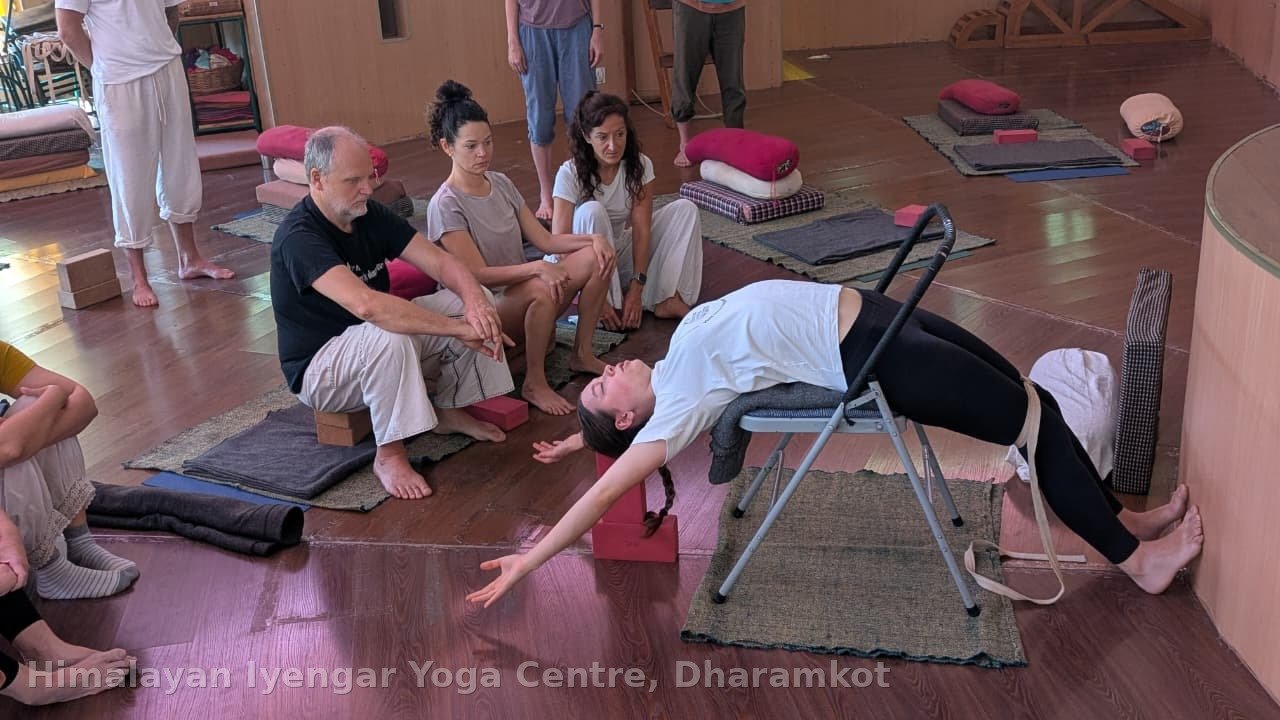
In the Iyengar tradition, practitioners are taught to bring awareness into every part of the body, from the skin to the deeper layers, with precision and patience. This is a kind of inner lamp. Where is the weight? Where is the lift? Is the breath even? Attention lights up places in the body that were in the dark. The same applies to the mind. A steady, precise attention is how we find where we are dull, restless or stuck, and gently correct it. Diwali, in this sense, is not only a night of outer lamps. It is an invitation to light the lamp of attention within.
This is the way of practice taught at HIYC by Master Sharat Arora, who studied directly with B.K.S. Iyengar. If you would like to experience it, the 5-Day Yoga Course in Dharamshala is the natural place to begin.
Celebrating Diwali the Yogic Way
Patanjali lists five personal observances, the niyamas (Sutra 2.32): shaucha (cleanliness), santosha (contentment), tapas (discipline), svadhyaya (self-study) and ishvara-pranidhana (surrender). They fit Diwali well.
- Shaucha: clean the home, and also clear one habit, one grudge or one pile of clutter.
- Santosha: notice what you already have before you add anything new.
- Tapas: enjoy the festival without excess, in food, spending and screens.
- Svadhyaya: read a verse or two from the Gita or the Sutras on one of the festival evenings.
- Ahimsa and generosity: choose clay lamps over loud fireworks, be gentle with animals and neighbours, and give something to someone who has less.
- One quiet moment: sit before a lit lamp for a few minutes, breathe evenly and let the mind rest on the flame. If you are drawn to longer periods of quiet, read our guide to silent yoga retreats in India.
Other Aspects Worth Remembering
- Livelihoods. Clay lamps, sweets, flowers and crafts support potters, farmers and small traders. Buying from them keeps the festival alive for those who make it.
- Environment. Choosing natural colours for rangoli, clay diyas and fewer firecrackers is kind to the air, the water and the animals.
- Many faiths, one light. Hindus, Jains, Sikhs and some Buddhists all observe festivals of light around this time. The shared image says something about how deeply this idea runs.
- Family and community. The festival brings people back to one another, and that may be its quietest gift.
Frequently Asked Questions
Diwali, or Deepavali, comes from Sanskrit words meaning a row of lamps.
Yes. Yoga treats ignorance as darkness and knowledge as light, and the Sutras, the Gita and the Upanishads all use this image.
No. Physics describes how light behaves but does not prove spiritual claims. Its ideas can serve as helpful images, nothing more.
Keep the home ventilated, eat moderately, avoid loud fireworks and make time for a quiet moment with a lamp.
Closing Thought
A lamp does not fight the darkness. It simply shines, and the darkness has nowhere to stay. The same is true inside us. We do not need to struggle against our confusion. We need to light a small flame of attention and let it grow. May this Diwali be a quiet one for the mind, a clean one for the body and a bright one for the heart.
Related reading: Yoga for Anxiety and What Is Iyengar Yoga?
To learn more about our classes, please visit our Contact page or see upcoming course dates.
चंद्रमास की सबसे अँधेरी रात को लाखों छोटी लौ जल उठती हैं। ऋतु, मनोविज्ञान, भौतिकी, योगसूत्र, भगवद्गीता और आयंगर परंपरा की दृष्टि से जानिए कि शरीर, मन और आत्मा के लिए दीपावली का क्या अर्थ है।
चंद्रमास की सबसे अँधेरी रात को लाखों छोटी लौ जल उठती हैं। खिड़कियाँ दमकती हैं, आँगन रंगों से भर जाते हैं, और कुछ दिनों के लिए पूरा देश मानो प्रकाश की ओर मुड़ जाता है। दीपावली का आनंद लेना आसान है और उसे समझाना कठिन, क्योंकि उसमें एक साथ कई परतें हैं: एक कथा, एक ऋतु, एक मनोविज्ञान, एक विज्ञान और एक आध्यात्मिक शिक्षा। बी.के.एस. आयंगर ने अपनी सबसे प्रसिद्ध पुस्तकों के नाम Light on Yoga, Light on Pranayama और Light on Life रखे, और यह संयोग नहीं है कि योग बार-बार प्रकाश की उपमा तक पहुँचता है। आइए दीपावली को हर पक्ष से, एक-एक करके देखें।
संक्षेप में
- दीपावली शरद ऋतु की अमावस्या की रात को आती है और पाँच दिन मनाई जाती है। उसका केंद्रीय चित्र अँधेरे के विरुद्ध जलता एक दीप है।
- अलग-अलग परंपराएँ अलग कथाएँ सुनाती हैं, पर सब प्रकाश की अंधकार पर विजय की बात करती हैं।
- ऋतु-परिवर्तन, प्रकाश, सफ़ाई, अनुष्ठान और साथ होना, हर एक का शरीर और मन पर वास्तविक प्रभाव है।
- भौतिकी प्रकाश का वर्णन कर सकती है, पर आध्यात्मिक शिक्षाओं को प्रमाणित नहीं कर सकती। फिर भी दोनों उपमा के रूप में एक-दूसरे को प्रेरित कर सकते हैं।
- योगसूत्र, भगवद्गीता और उपनिषद सभी अज्ञान को अंधकार और ज्ञान को प्रकाश मानते हैं।
- योगिक ढंग से मनाने का तरीका सरल है: स्वच्छ, शांत, कृतज्ञ, दयालु और मौन।
कथा और पाँच दिन
दीपावली का अर्थ है दीपों की पंक्ति। यह पाँच दिन मनाई जाती है। धनतेरस स्वास्थ्य और समृद्धि के साथ पर्व आरंभ करता है। नरक चतुर्दशी, यानी छोटी दिवाली, नरकासुर के वध का स्मरण कराती है। मुख्य रात्रि लक्ष्मी पूजा की है, जब घर जगमगाते हैं और कल्याण की देवी का स्वागत होता है। गोवर्धन पूजा श्रीकृष्ण द्वारा अपने लोगों की रक्षा के लिए पर्वत उठाने को याद करती है, और भाई दूज भाई-बहन के बंधन का सम्मान करती है।
बहुत से परिवार इस पर्व को वनवास के बाद श्रीराम के अयोध्या लौटने से जोड़ते हैं, जब नगर ने दीप जलाकर उनका स्वागत किया। अन्य परंपराओं में इन्हीं दिनों के अन्य अर्थ हैं। जैन महावीर के निर्वाण को याद करते हैं, और सिख बंदी छोड़ दिवस मनाते हैं, गुरु हरगोबिंद की रिहाई की स्मृति में। नेपाल के कुछ बौद्ध समुदाय भी संबंधित पर्व मनाते हैं। कथाएँ अलग हैं, पर धागा एक है: प्रकाश, मुक्ति और नवीकरण।
ऋतु, प्रकाश और शरीर का विज्ञान
दीपावली शरद ऋतु में आती है, जब दिन छोटे होते हैं और मौसम ठंडा और शुष्क होने लगता है। यह वह समय है जब शरीर और मन चुपचाप गियर बदलते हैं।
- प्रकाश और मनोदशा। प्रकाश का संपर्क हमारे सोने-जागने के चक्र को नियंत्रित करने में मदद करता है, और दिन का उजाला घटने पर बहुत लोग उदास महसूस करते हैं। शामों में उजली, गर्म सभाएँ, दीप और साथ का सचमुच मन ऊपर उठा सकते हैं।
- स्वच्छ घर। दीपावली से पहले सफ़ाई की परंपरा धूल और अव्यवस्था हटाती है। साफ़ स्थान श्वास और मन के लिए हल्का होता है।
- आयुर्वेद और ऋतु। आयुर्वेद इसे संक्रमण का समय मानता है, जब पाचन अनियमित और रूखापन बढ़ सकता है। परंपरागत सलाह में गर्म, पका हुआ, सुपाच्य भोजन, घी का संतुलित उपयोग और स्नान से पहले गुनगुने तेल की मालिश शामिल है, जो छोटी दिवाली पर अभ्यंग की प्रथा है।
- मिठाई संयम से। उत्सव का भोजन आनंद का हिस्सा है, पर दिन-प्रतिदिन भारी, मीठे भोजन शरीर को सुस्त कर सकते हैं। थोड़ा-थोड़ा लेना ही समझदारी है।
एक ईमानदार बात भी कहनी ज़रूरी है। दीप और ख़ासकर पटाखे हवा में धुआँ और कण छोड़ते हैं। पटाखे वायु की गुणवत्ता बिगाड़ने के लिए जाने जाते हैं, और वे दमा के रोगियों, बुज़ुर्गों और जानवरों के लिए कठिन होते हैं। यह परंपरागत मान्यता कि दीप हवा को शुद्ध करते हैं, विज्ञान से सिद्ध नहीं है, इसलिए जब बहुत दीप जल रहे हों तो कमरे को हवादार रखें। एक शांत, स्वच्छ दीपावली अधिक योगिक भी है।
प्रकाश और अनुष्ठानों का मनोविज्ञान
मनोवैज्ञानिक लंबे समय से देखते आए हैं कि अनुष्ठान लोगों को अर्थ और स्थिरता का बोध देते हैं। दीपावली उनका समृद्ध समूह देती है: सफ़ाई, दीप जलाना, सजावट, उपहार, साथ भोजन। इसके कई अंश मन के लिए अच्छे हैं।
- नई शुरुआत। सफ़ाई और नए वस्त्र एक देहरी का चिह्न हैं। बहुत लोगों को दोबारा शुरू करना तब आसान लगता है जब कैलेंडर उन्हें एक स्पष्ट क्षण दे देता है।
- कृतज्ञता। लक्ष्मी पूजा मूल में उस चीज़ के लिए धन्यवाद है जो व्यक्ति के पास पहले से है। कृतज्ञता स्थायी कल्याण के लिए सबसे अधिक अध्ययन की गई आदतों में से एक है।
- जुड़ाव। साथ भोजन और मुलाक़ातें हमें याद दिलाती हैं कि हम किसी चीज़ का हिस्सा हैं। मज़बूत सामाजिक संबंध मानसिक स्वास्थ्य के सबसे भरोसेमंद सहारों में हैं।
- आशा। जलता दीपक एक सरल, दिखाई देने वाला वादा है कि अँधेरा टिकेगा नहीं।
यह कहना भी उचित है कि उत्सव तनाव ला सकते हैं: ज़्यादा ख़र्च, पारिवारिक दबाव, घर से दूर रहने वालों का अकेलापन। अगर दीपावली आपके लिए कठिन है, तो उसे छोटा और कोमल रखिए। एक दीप और कुछ शांत मिनट पर्याप्त हैं। (अंग्रेज़ी में पढ़ें: Yoga for Anxiety)
भौतिकी क्या कह सकती है, और क्या नहीं
लौ प्रकाश देती है, और भौतिकी में प्रकाश फ़ोटॉन नामक कणों से बना है जो तरंग की तरह भी व्यवहार करते हैं। यह तरंग और कण का स्वभाव वास्तविक और भली-भाँति परखा हुआ है, और यह दिखाता है कि प्रकृति पहली नज़र से अधिक सूक्ष्म है। प्रकाश के दो और तथ्य दीपावली के अच्छे साथी विचार हैं। अंधकार कोई पदार्थ नहीं बल्कि प्रकाश का अभाव है, इसीलिए एक दीपक पूरे कमरे को बदल सकता है। और एक दीप से दूसरा दीप जलाने पर पहले का कुछ कम नहीं होता। लौ बाँटी जा सकती है, बिना घटे।
यहाँ सावधानी ज़रूरी है। क्वांटम भौतिकी यह सिद्ध नहीं करती कि विचार यथार्थ बनाते हैं, और वह किसी आध्यात्मिक दावे को सिद्ध नहीं करती। जो कथन ऐसा कहते हैं, वे आमतौर पर विज्ञान को उसके कथन से आगे खींच देते हैं। हम न्यायपूर्वक यह कर सकते हैं कि इन विचारों को उपमा के रूप में लें। अज्ञान अंधकार जैसा है: वह एक अभाव है, इसलिए हटाया जा सकता है, और ज्ञान बाँटने से घटता नहीं।
योगसूत्र: अविद्या और प्रकाश पर पर्दा
पतंजलि दुःख की जड़ को अविद्या कहते हैं, जो ग़लत समझ का अंधकार है।
अनित्याशुचिदुःखानात्मसु नित्यशुचिसुखात्मख्यातिरविद्या।
अनित्य को नित्य, अशुद्ध को शुद्ध, दुःख को सुख और अनात्म को आत्मा समझना अविद्या है। (सूत्र 2.5)
इसका उपाय एक प्रकार के प्रकाश के रूप में वर्णित है। सूत्र 2.52 कहता है कि प्राणायाम से भीतरी प्रकाश पर पड़ा पर्दा पतला होता है। सूत्र 1.36 एक ऐसी अवस्था की बात करता है जो शोकरहित और ज्योतिर्मय है।
ततः क्षीयते प्रकाशावरणम्।
तब प्रकाश का आवरण क्षीण हो जाता है। (सूत्र 2.52)
विशोका वा ज्योतिष्मती।
अथवा वह अवस्था जो शोकरहित और ज्योतिर्मय है। (सूत्र 1.36)
इसलिए दीपावली के दीप केवल सजावट नहीं हैं। योग में वे कुछ बहुत व्यावहारिक की ओर संकेत करते हैं: आवरण हटाइए, और जो प्रकाश सदा से था, वह दिखाई देने लगता है।
भगवद्गीता और उपनिषद: ज्ञान का दीपक
गीता दीपक की उपमा सीधे प्रयोग करती है। अध्याय 10, श्लोक 11 में श्रीकृष्ण कहते हैं कि उन पर करुणा करके वे अज्ञान से उपजे अंधकार को ज्ञान के प्रकाशमान दीपक से नष्ट करते हैं।
तेषामेवानुकम्पार्थमहमज्ञानजं तमः। नाशयाम्यात्मभावस्थो ज्ञानदीपेन भास्वता॥
(गीता 10.11)
अध्याय 13, श्लोक 17 में परम तत्त्व को ज्योतियों की भी ज्योति और अंधकार से परे कहा गया है। अध्याय 14, श्लोक 11 में गीता कहती है कि जब शरीर के सभी द्वारों में ज्ञान का प्रकाश उपजता है, तब जानो कि सत्त्व बढ़ा है। यह प्रकृति के तीन गुणों से जुड़ता है: सत्त्व स्पष्टता है, रजस बेचैनी है और तमस जड़ता है। दीपावली हमसे सत्त्व बढ़ाने को कहती है।
यही इच्छा एक प्रसिद्ध उपनिषद-प्रार्थना में भी कही गई है, जो अक्सर दीपावली पर बोली जाती है:
असतो मा सद्गमय। तमसो मा ज्योतिर्गमय। मृत्योर्मा अमृतं गमय॥
मुझे असत्य से सत्य की ओर, अंधकार से प्रकाश की ओर, मृत्यु से अमरता की ओर ले चलो। (बृहदारण्यक उपनिषद 1.3.28)
आयंगर दृष्टि: ध्यान के द्वारा प्रकाश
आयंगर परंपरा में साधकों को सिखाया जाता है कि वे शरीर के हर भाग में, त्वचा से लेकर गहरी परतों तक, सटीकता और धैर्य के साथ जागरूकता ले जाएँ। यह एक तरह का भीतरी दीपक है। भार कहाँ है? उठान कहाँ है? क्या श्वास समान है? ध्यान शरीर के उन स्थानों को रोशन कर देता है जो अँधेरे में थे। यही मन पर भी लागू होता है। स्थिर, सटीक ध्यान से ही हम पहचानते हैं कि हम कहाँ जड़, बेचैन या अटके हैं, और उसे कोमलता से सुधारते हैं। इस अर्थ में दीपावली केवल बाहरी दीपों की रात नहीं है। वह भीतर ध्यान का दीपक जलाने का निमंत्रण है।
HIYC में यही अभ्यास योगाचार्य शरत अरोड़ा सिखाते हैं, जिन्होंने स्वयं बी.के.एस. आयंगर से अध्ययन किया। आरंभ करने के लिए धर्मशाला में 5-दिवसीय योग कोर्स सबसे स्वाभाविक कदम है।
योगिक ढंग से दीपावली मनाना
पतंजलि पाँच व्यक्तिगत आचरण गिनाते हैं, जो नियम हैं (सूत्र 2.32): शौच (स्वच्छता), संतोष, तप (अनुशासन), स्वाध्याय और ईश्वर-प्रणिधान (समर्पण)। ये दीपावली पर अच्छी तरह बैठते हैं।
- शौच: घर साफ़ कीजिए, और साथ में एक आदत, एक गिला या अव्यवस्था का एक ढेर भी हटाइए।
- संतोष: कुछ नया जोड़ने से पहले देखिए कि आपके पास पहले से क्या है।
- तप: पर्व का आनंद लीजिए, पर अति के बिना, भोजन, ख़र्च और स्क्रीन में।
- स्वाध्याय: पर्व की किसी शाम गीता या योगसूत्र के एक-दो श्लोक पढ़िए।
- अहिंसा और उदारता: तेज़ पटाखों की जगह मिट्टी के दीप चुनिए, जानवरों और पड़ोसियों के प्रति कोमल रहिए, और जिसके पास कम है उसे कुछ दीजिए।
- एक शांत क्षण: जलते दीपक के सामने कुछ मिनट बैठिए, समान श्वास लीजिए और मन को लौ पर टिकने दीजिए। (अंग्रेज़ी में पढ़ें: Silent Yoga Retreat in India)
याद रखने योग्य अन्य पक्ष
- आजीविका। मिट्टी के दीप, मिठाई, फूल और शिल्प कुम्हारों, किसानों और छोटे व्यापारियों को सहारा देते हैं। उनसे ख़रीदना उस पर्व को जीवित रखता है जो वे बनाते हैं।
- पर्यावरण। रंगोली के लिए प्राकृतिक रंग, मिट्टी के दीप और कम पटाखे हवा, पानी और जानवरों के प्रति दयालु हैं।
- कई धर्म, एक प्रकाश। हिंदू, जैन, सिख और कुछ बौद्ध इसी समय के आसपास प्रकाश के पर्व मनाते हैं। यह साझा चित्र बताता है कि यह विचार कितना गहरा है।
- परिवार और समुदाय। पर्व लोगों को एक-दूसरे तक लौटा लाता है, और शायद यही उसका सबसे शांत उपहार है।
अक्सर पूछे जाने वाले प्रश्न
दीपावली संस्कृत शब्दों से आता है जिनका अर्थ है दीपों की पंक्ति।
हाँ। योग अज्ञान को अंधकार और ज्ञान को प्रकाश मानता है, और योगसूत्र, गीता और उपनिषद सभी इस उपमा का प्रयोग करते हैं।
नहीं। भौतिकी बताती है कि प्रकाश कैसे व्यवहार करता है, पर आध्यात्मिक दावों को सिद्ध नहीं करती। उसके विचार केवल सहायक उपमाओं का काम कर सकते हैं।
घर को हवादार रखिए, संयम से खाइए, तेज़ पटाखों से बचिए और दीपक के साथ एक शांत क्षण बिताइए।
समापन
दीपक अँधेरे से लड़ता नहीं। वह बस जलता है, और अँधेरे के पास टिकने की जगह नहीं रहती। यही हमारे भीतर भी सच है। हमें अपने भ्रम से संघर्ष नहीं करना है। हमें ध्यान की एक छोटी लौ जलानी है और उसे बढ़ने देना है। यह दीपावली मन के लिए शांत हो, शरीर के लिए स्वच्छ हो और हृदय के लिए उजली हो।
हमारी कक्षाओं के बारे में अधिक जानने के लिए कृपया इस वेबसाइट का “संपर्क” पृष्ठ देखें, या आगामी कोर्स की तिथियाँ देखें।
Bring Light to Your Practice in the Himalayas
Learn the precise, attentive Iyengar method with Master Yoga Teacher Sharat Arora in Dharamkot.