Himachal Pradesh has quietly become one of India's most-searched destinations for a yoga retreat — but "Himachal" covers a lot of ground, from the bustling backpacker lanes of Manali to the quiet forest paths of Dharamkot. Here's how the main areas actually differ, and how to pick the right one.
Search for a yoga retreat in Himachal and you'll find dozens of options scattered across a state roughly the size of Switzerland — from the Kullu Valley to the Dhauladhar range. That's a problem if you're trying to book something specific: "Himachal Pradesh" isn't one yoga destination, it's several very different ones, each with its own character, teaching lineage, and pace.
This guide breaks down the real differences between them, so you can choose based on what you actually want from a retreat — not just the state it happens to be in.
Why Himachal Pradesh Is India's Yoga Heartland
Long before "wellness travel" became a marketing term, Himachal Pradesh was already home to serious yoga practice. The Dalai Lama's residence in McLeod Ganj brought a wave of meditation and mindfulness culture to the region in the 1960s, and the cooler Himalayan climate — a relief from the heat of Rishikesh or Goa for much of the year — has kept it a preferred base for longer, more intensive practice ever since.
What sets Himachal apart from India's other major yoga hubs isn't marketing, it's terrain: forested foothills, genuine seasonal quiet outside peak tourist months, and a culture that's had decades to build up experienced, long-standing teachers rather than pop-up retreat centres.
Comparing Himachal's Main Yoga Destinations
If you're trying to decide where in Himachal Pradesh to go, these are the four areas that come up most often — and they suit genuinely different kinds of travellers.
Dharamshala & Dharamkot
The most established yoga destination in Himachal Pradesh, and the one with the deepest bench of long-running, serious schools — HIYC has been teaching here since 1985. Dharamkot specifically, a quiet forested hillside above McLeod Ganj, is where most of the dedicated yoga centres are based, distinct from the busier tourist strip below. This is the right choice if you want structured, in-depth study with an experienced teacher rather than a loosely-scheduled retreat week.
Manali
More geared toward general wellness tourism — think yoga alongside trekking, cafes, and a younger backpacker crowd. Good for a shorter, lower-commitment introduction to yoga as part of a broader Himachal trip, less suited to anyone looking for a structured, multi-week course of study.
Kasol & Parvati Valley
Popular with a younger, more transient travel crowd, often combined with hiking in the valley. Retreats here tend to be shorter and more informal than Dharamshala's established schools, with more turnover in who's teaching season to season.
Bir
Known primarily for paragliding, with a small but growing wellness scene and a notably Buddhist-influenced, quiet atmosphere. Worth considering if you want yoga as one part of a slower, more contemplative trip rather than the main focus.
What Makes a Retreat Different From a Course
These two words get used interchangeably, but they usually mean different things. A "retreat" typically implies a shorter stay — a few days to a week — built around rest, gentle practice, and stepping away from routine. A structured "course" implies a defined curriculum with a beginning and end, usually longer, aimed at building real skill rather than just unwinding.
Neither is better — it depends what you're after. If you want a short reset, a retreat-style stay fits. If you want to leave with an actual, transferable understanding of alignment and practice, a structured course goes further.
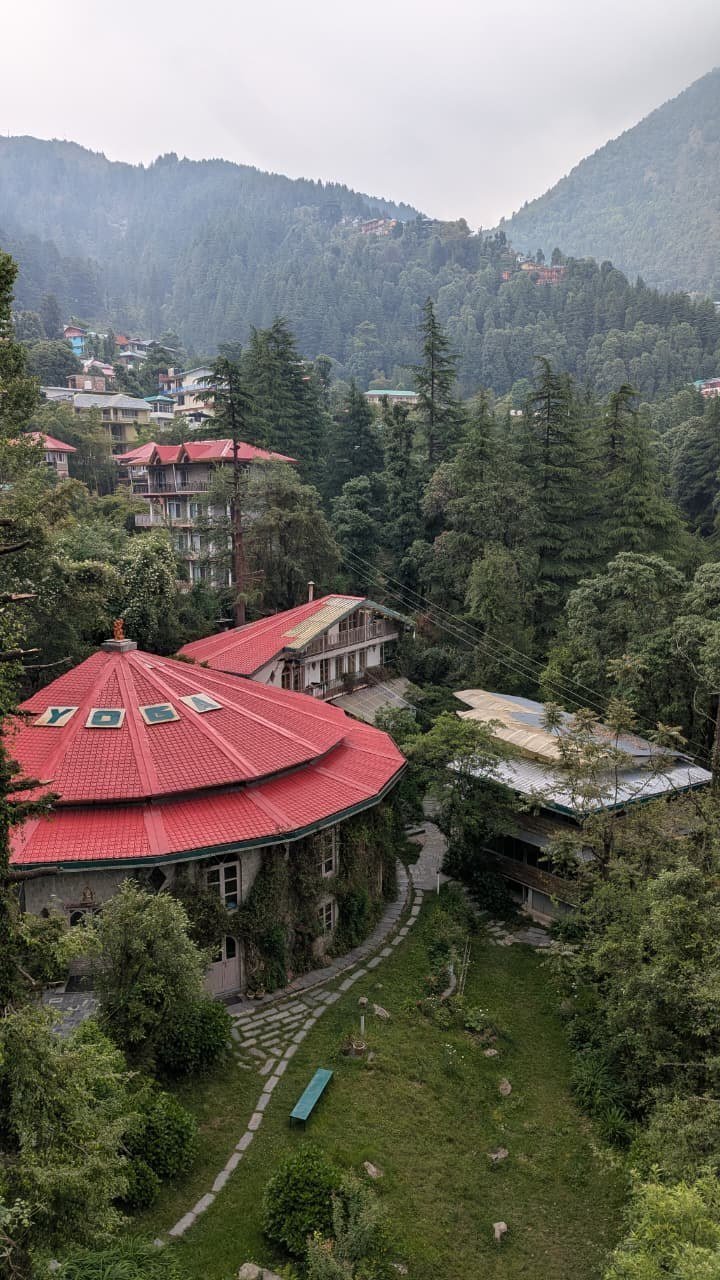
HIYC's Retreat-Style Programs in the Himalayas
At HIYC in Dharamkot, the courses are structured but designed to work equally well as a retreat if that's what you're looking for:
- 5-Day Yoga Course — the closest equivalent to a classic short retreat: enough time to properly unwind and get a real feel for the Iyengar method, without a long commitment. Explore the 5-Day Course →
- 9-Day Immersion — for those who want the retreat experience to go deeper, with enough time for the body to genuinely settle into a daily rhythm. Explore the 9-Day Immersion →
- 160-Hour Intensive — includes 20 days of noble silence, for anyone seeking the more contemplative, retreat-like end of the spectrum rather than an active holiday. Explore the 160-Hour Intensive →
Read more about what the destination itself is like day-to-day: Yoga in Dharamshala: The Complete Guide →
Best Time of Year for a Himachal Yoga Retreat
March to May and September to November are the most reliable windows across the state — clear skies, comfortable daytime temperatures, and the Himalayan views the region is known for actually visible. June through August brings the monsoon, which can mean heavy rain and landslide-related road closures in some areas, particularly further into the mountains. December through February is cold but clear, and appeals to those who prefer a quieter, off-season retreat with fewer other travellers around.
How to Choose the Right Retreat in Himachal
A few honest questions to ask before booking anywhere in the state:
- How long has the school actually been operating? Himachal has seen a wave of retreat centres open in the last few years alongside long-established ones — ask directly, and expect a real answer.
- Who is actually teaching? A retreat is only as good as the person leading it. Look for a named, experienced teacher rather than a rotating cast.
- What's the daily structure? "Retreat" can mean anything from a fully scheduled day to almost no structure at all — know which you're booking before you arrive.
- Does it match your experience level? Some retreats assume prior practice; make sure beginners are genuinely accommodated if that's you.
Frequently Asked Questions
Which part of Himachal Pradesh is best for a yoga retreat?
Dharamshala and Dharamkot are the most established, with the highest concentration of experienced teachers and long-running schools like HIYC. Manali and Kasol suit a shorter, more casual retreat; Bir suits those combining yoga with paragliding or a quieter Buddhist-influenced setting.
How long should a yoga retreat in Himachal Pradesh be?
A short retreat of 3–5 days is enough to unwind and get a feel for a teacher's method, but most practitioners find real change starts around the 9-day mark, once the body and nervous system have settled into a daily rhythm.
Is Himachal Pradesh good for yoga beginners?
Yes. Most established retreat centres in Himachal Pradesh, including HIYC, run courses specifically structured for complete beginners, with props and modifications so no prior flexibility or experience is required.
Wherever in Himachal Pradesh you end up, the mountains do a lot of the work — the quiet, the altitude, and the distance from ordinary routine all help a retreat land differently than the same practice would at home.
Ready for Your Himachal Retreat?
Join HIYC in Dharamkot, in the heart of the Himalayas, for authentic Iyengar yoga at any level.