Iyengar Yoga is widely respected for its emphasis on precision, alignment and mindful practice. Here is the story of the tradition B.K.S. Iyengar built, and how Master Sharat Arora's own decades of teaching have refined it into what is practised today at HIYC.
Yoga has taken many forms over the centuries, each offering its own path towards health, self-awareness and inner balance. Among the many traditions practised around the world today, Iyengar Yoga is widely respected for its emphasis on precision, alignment and mindful practice. Rather than focusing on how many postures you can perform or how quickly you move through a sequence, Iyengar Yoga invites you to slow down, pay attention, and discover the intelligence within every movement.
For many students, this approach changes their understanding of yoga completely. A pose is no longer something to "achieve" but something to experience. Instead of stretching further or pushing harder, the practice becomes one of observation, balance and ease.
At Himalayan Iyengar Yoga Centre (HIYC), we have met students from every walk of life — beginners taking their very first yoga class, experienced practitioners looking to deepen their understanding, and people seeking relief from pain or stress. While many arrive asking about Iyengar Yoga, they soon discover that yoga is far more than physical exercise. It is a lifelong journey of learning how to move, breathe and live with greater awareness.
This article explores the principles of Iyengar Yoga, its history, and the qualities that have made it one of the world's most influential yoga traditions. It also shares how Master Sharat Arora, after years of dedicated study with B.K.S. Iyengar and more than four decades of teaching, refined his own approach while remaining deeply rooted in the values of careful observation, balance and respect for the individual.
What Is Iyengar Yoga?
Iyengar Yoga is a method of classical Hatha Yoga developed by B.K.S. Iyengar, one of the most influential yoga teachers of the twentieth century. His teaching brought renewed attention to the importance of alignment, stability and conscious awareness in every posture.
Unlike styles that flow rapidly from one pose to the next, Iyengar Yoga encourages practitioners to spend time in each asana. Remaining in a posture allows the body to settle, the breath to become steady, and the mind to observe more clearly. Small adjustments in the feet, legs, spine, shoulders or hands often reveal a completely different experience within the same pose.
This careful attention to detail helps students build strength and flexibility together, rather than sacrificing one for the other. Every movement has a purpose, and every posture becomes an opportunity to understand how the body functions as a whole.
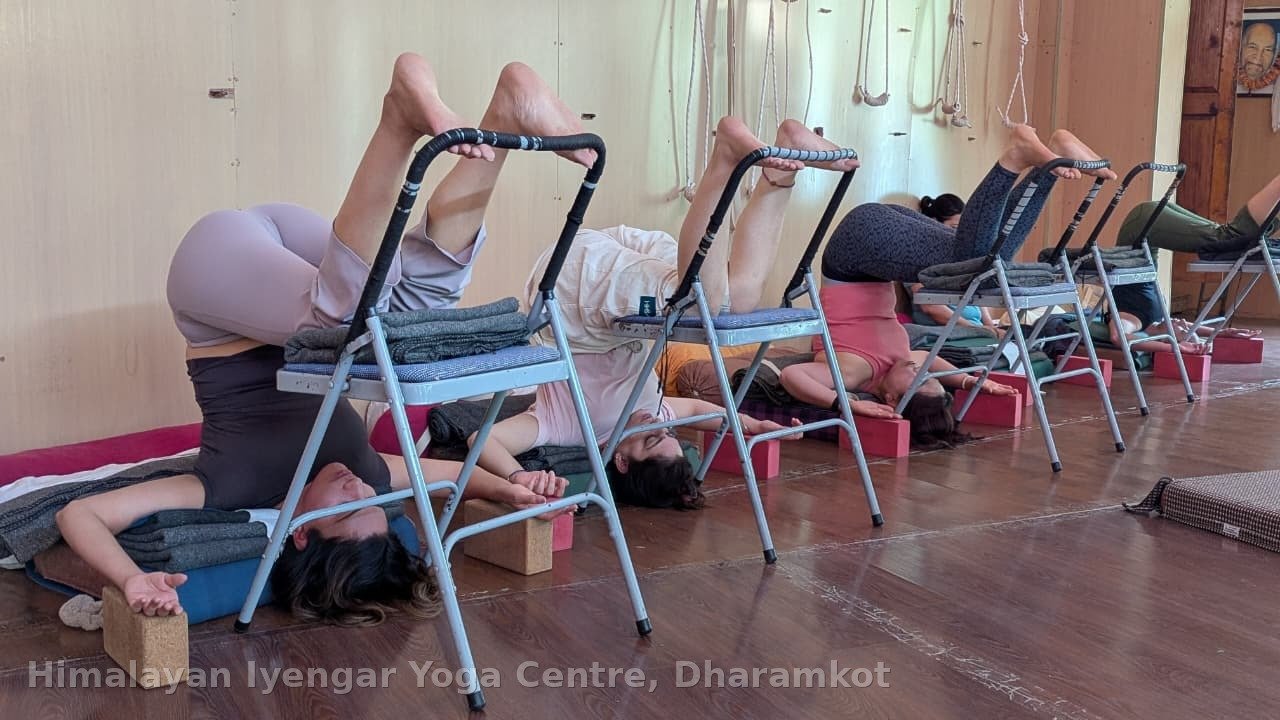
One of the defining features of Iyengar Yoga is the thoughtful use of props such as blocks, belts, blankets, bolsters, ropes and chairs. These are not shortcuts or substitutes for practice. Instead, they help students experience correct alignment safely, regardless of age, experience or physical limitations. Props make yoga more accessible while preserving the integrity of each posture.
For this reason, Iyengar Yoga has become known as one of the most systematic and inclusive methods of yoga practice in the world.
Then & Now at HIYCTraditional Iyengar Yoga — The Early Years
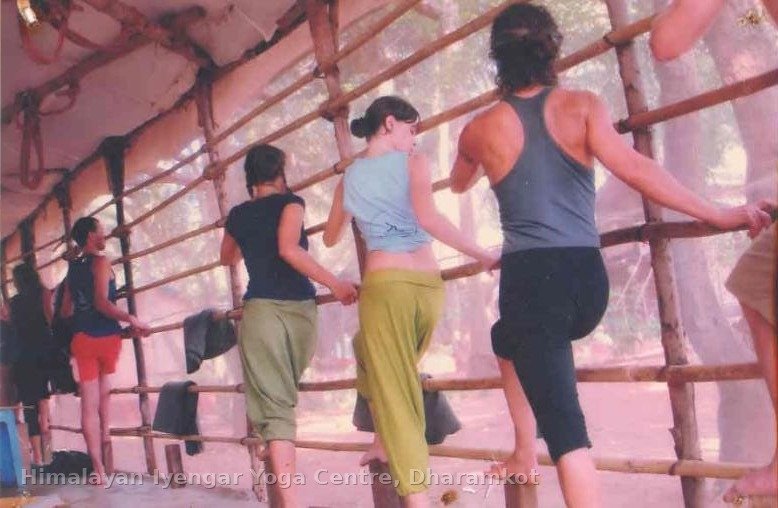
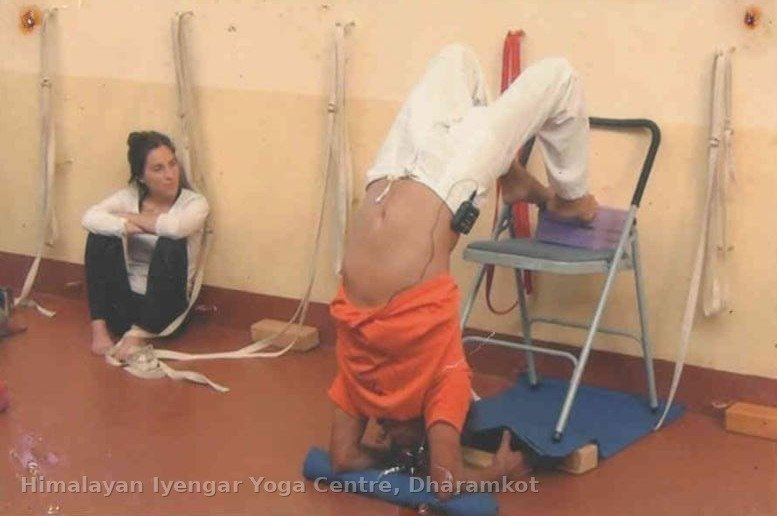
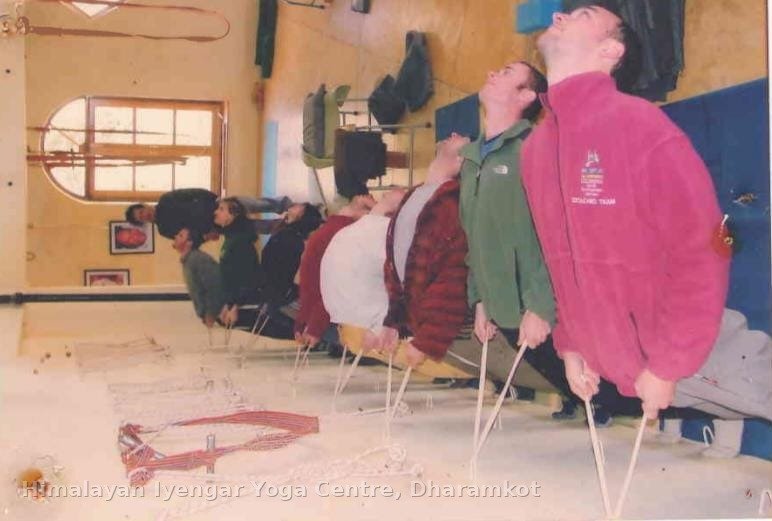
The rope wall, the wooden chair and long, held postures have always been at the heart of Iyengar Yoga. These images from HIYC's earlier years show students working with the same props and the same patient attention that have defined this tradition for decades.
The Legacy of B.K.S. Iyengar
Bellur Krishnamachar Sundararaja Iyengar, known globally as B.K.S. Iyengar, transformed the way millions of people understood yoga. His own journey began in difficult circumstances. As a child, he struggled with poor health and was introduced to yoga by his teacher and brother-in-law, Tirumalai Krishnamacharya.
Years of disciplined practice gradually restored his health and deepened his understanding of the human body. As he began teaching, he realised that every student arrived with different abilities, strengths and challenges. A single approach could not serve everyone equally.
Through decades of observation and experience, he refined a method that made yoga accessible without compromising its depth. His teaching emphasised careful instruction, intelligent sequencing and an unwavering commitment to precision.
His influence reached far beyond India. Students travelled from around the world to study with him, and his book Light on Yoga introduced generations of practitioners to the richness of classical yoga. Today, his contribution continues to inspire teachers and students across continents.
Perhaps his greatest gift was reminding us that yoga is not about performance. It is about cultivating awareness through the body, allowing physical practice to become a doorway to clarity, discipline and inner stillness.
The Principles That Define Iyengar Yoga
Although every yoga tradition has its own character, several qualities have become closely associated with Iyengar Yoga.
Precision Over Performance
Modern culture often encourages us to move faster and achieve more. Yoga can easily become another activity where we measure ourselves against others.
Iyengar Yoga offers a different perspective. Rather than asking how deeply you can bend or how advanced a pose appears, it asks whether you are present within the posture.
A standing pose, for example, becomes an opportunity to explore balance through the feet, the steady engagement of the legs, the natural length of the spine, and the quiet rhythm of the breath. These seemingly small details gradually create greater stability throughout the entire body.
Alignment as a Foundation
Alignment is often misunderstood as making a posture look symmetrical or aesthetically pleasing. In reality, it is about creating conditions where the body functions efficiently and without unnecessary strain.
When the foundations of a posture are stable, the rest of the body can organise itself with greater ease. Over time, students develop stronger posture, healthier movement patterns and a deeper understanding of how different parts of the body work together.
This is one reason why so many physiotherapists, movement specialists and experienced yoga practitioners have appreciated the Iyengar approach over the years.
Awareness in Every Moment
Perhaps the most valuable lesson of Iyengar Yoga is learning how to pay attention.
Instead of moving automatically from one posture to another, students are encouraged to observe their experience. Where is unnecessary effort being held? Can the shoulders soften without losing strength? Is the breath smooth and unforced? Can stability exist alongside relaxation?
These questions transform yoga into a practice of self-study rather than self-judgement.
More Than Flexibility
One of the biggest misconceptions about yoga is that it is only for naturally flexible people. In reality, flexibility is simply one outcome of consistent practice — not the goal itself.
A balanced yoga practice develops strength, coordination, mobility, concentration, patience and resilience. Many people begin yoga hoping to touch their toes, but they continue because they discover something much more valuable: a calmer mind, healthier movement and a greater sense of connection with themselves.
When we stop chasing a posture and begin listening to the body, progress often happens naturally.
A Living Tradition
Like all authentic traditions, Iyengar Yoga has never stood still. It has inspired generations of teachers who have continued exploring how yoga can meet the needs of different people while remaining faithful to its deeper purpose.
Among those teachers is Master Sharat Arora, who spent seven years studying directly with B.K.S. Iyengar before dedicating his own life to teaching. Over more than forty-five years of working with thousands of students from different ages, cultures and physical conditions, his understanding continued to evolve.
Rather than moving away from the foundations he had received, he refined them through decades of careful observation and direct experience. His teaching reflects the same commitment to awareness, precision and respect for each individual while offering a distinctive approach that supports effortless breathing, balanced action and rest, and freedom from unnecessary tension.
The Sharat Arora Method Today
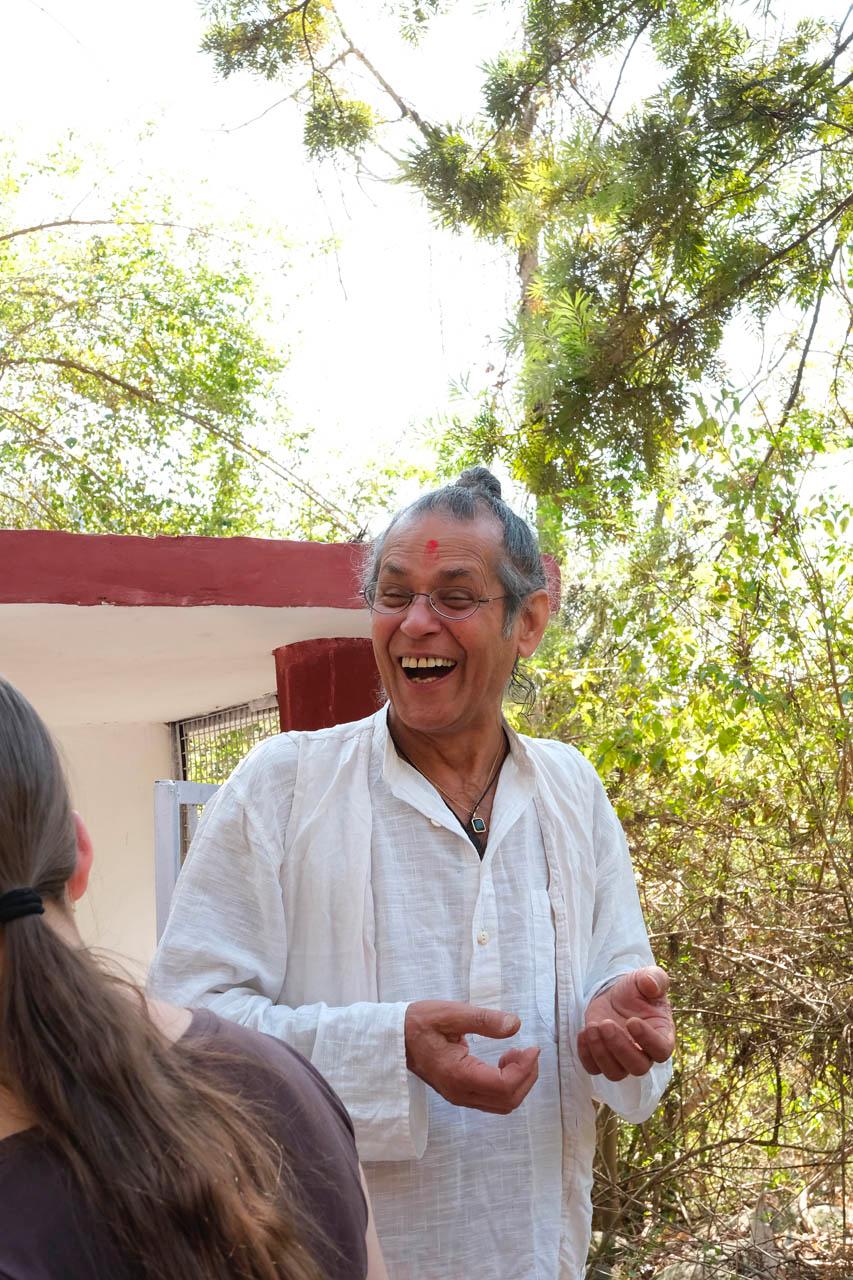
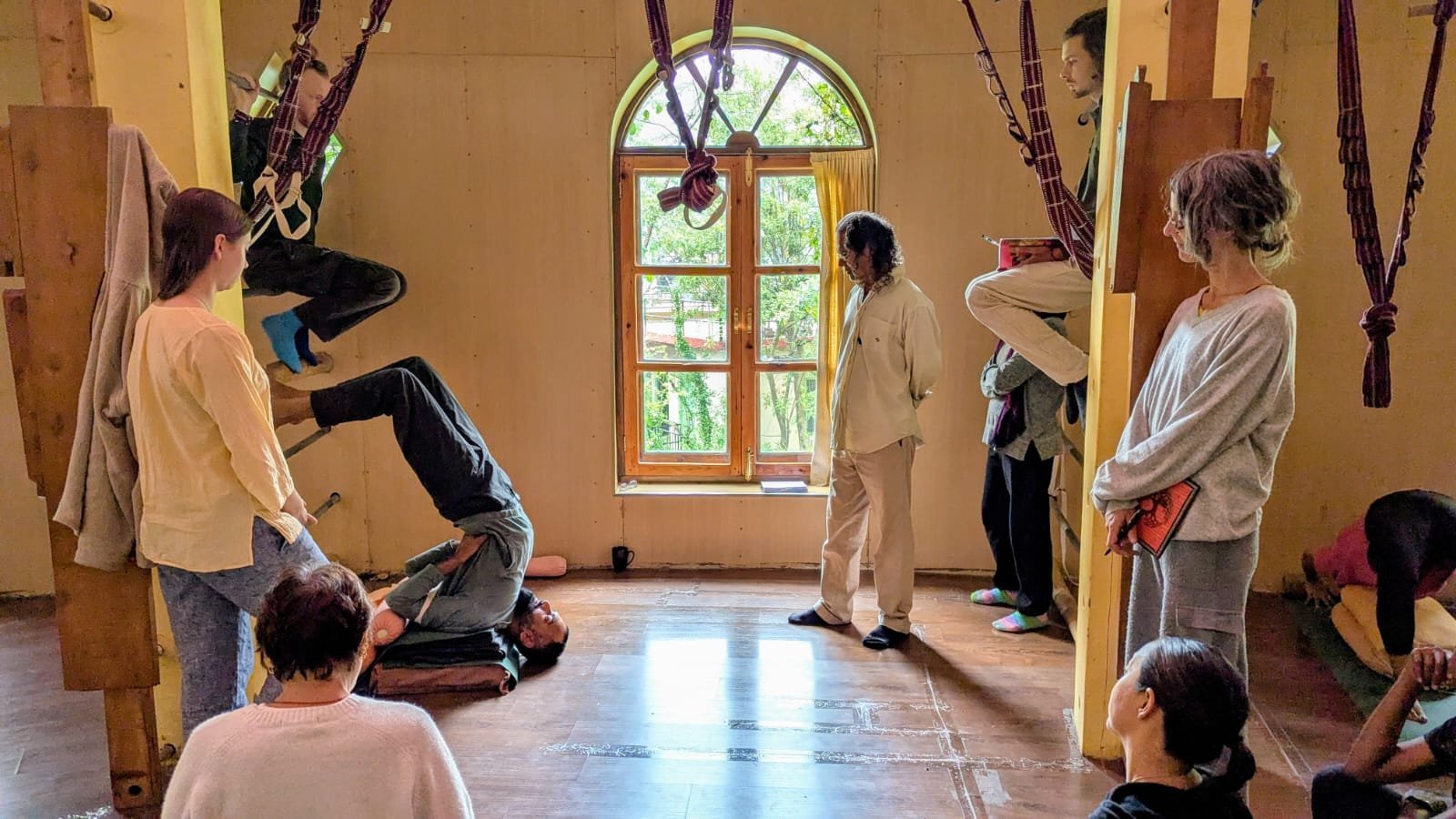
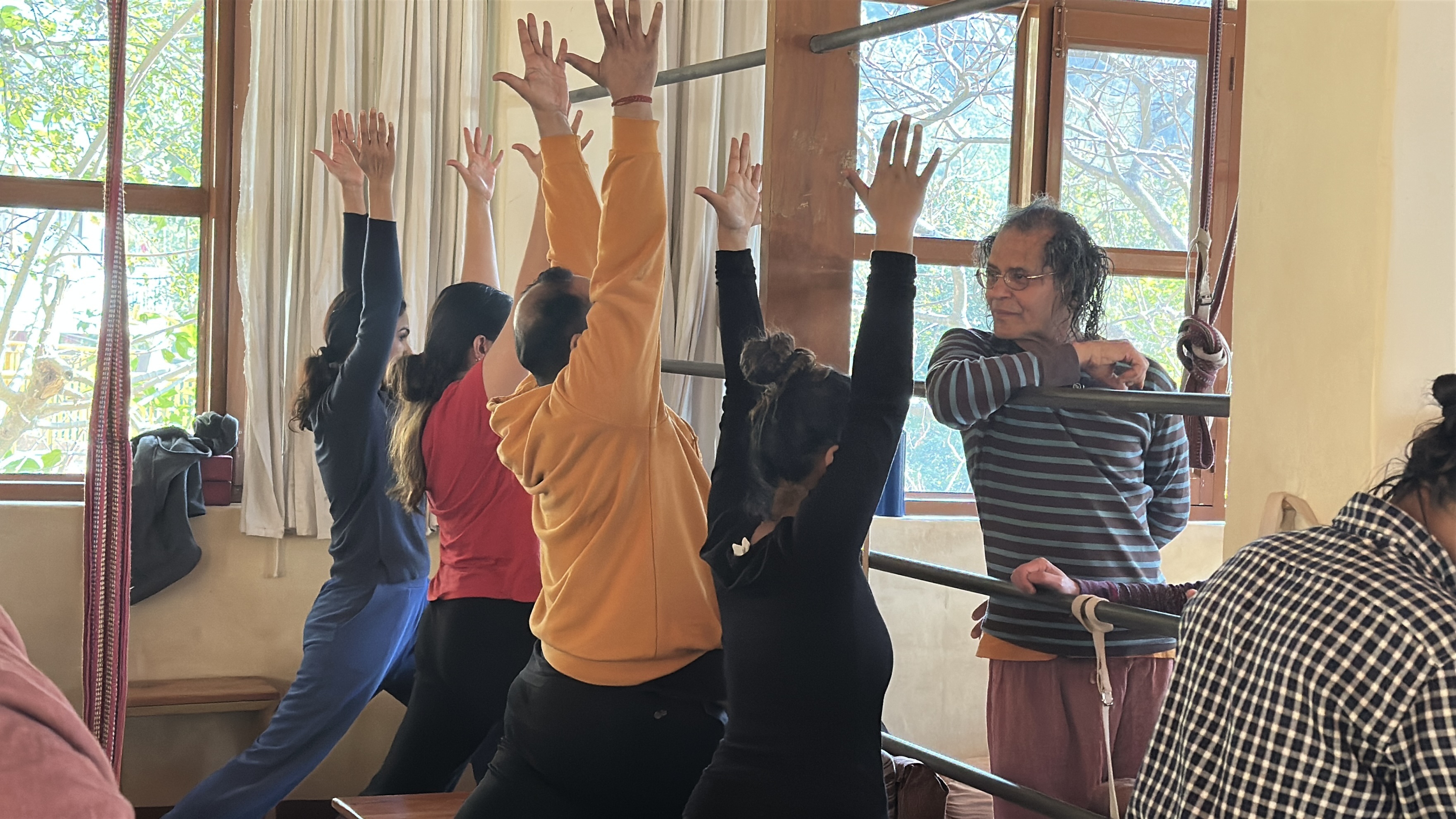
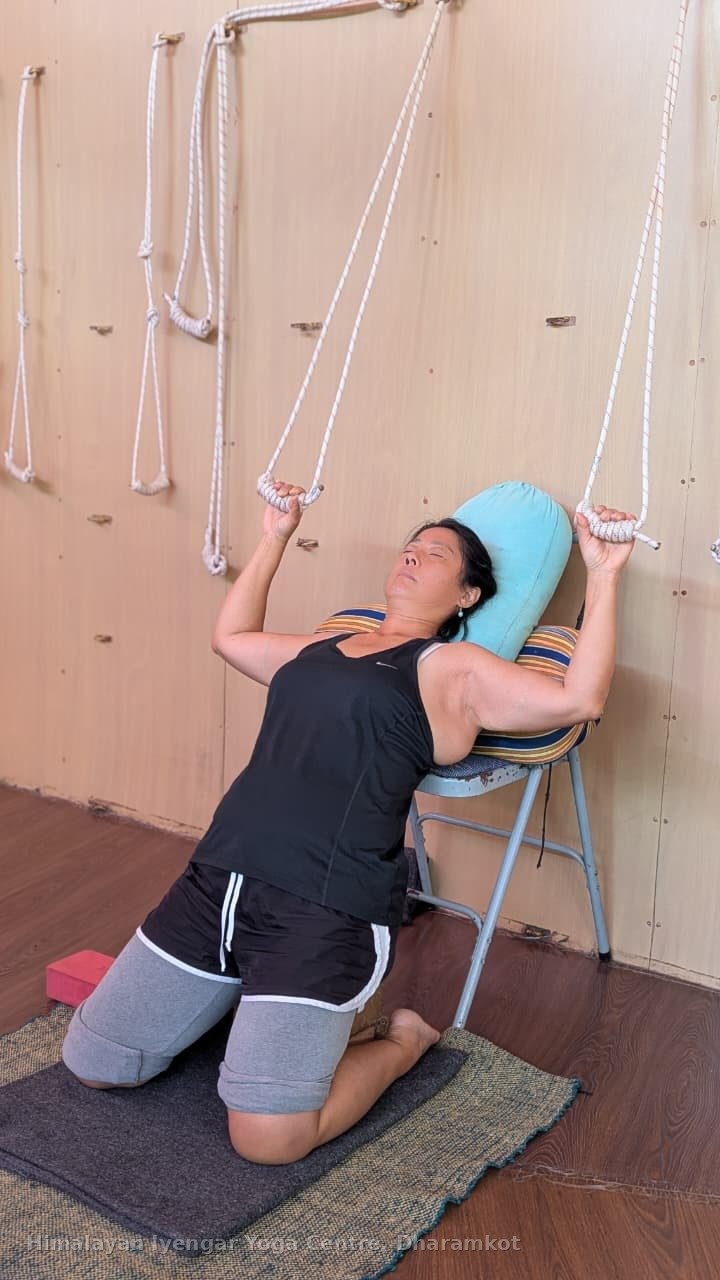
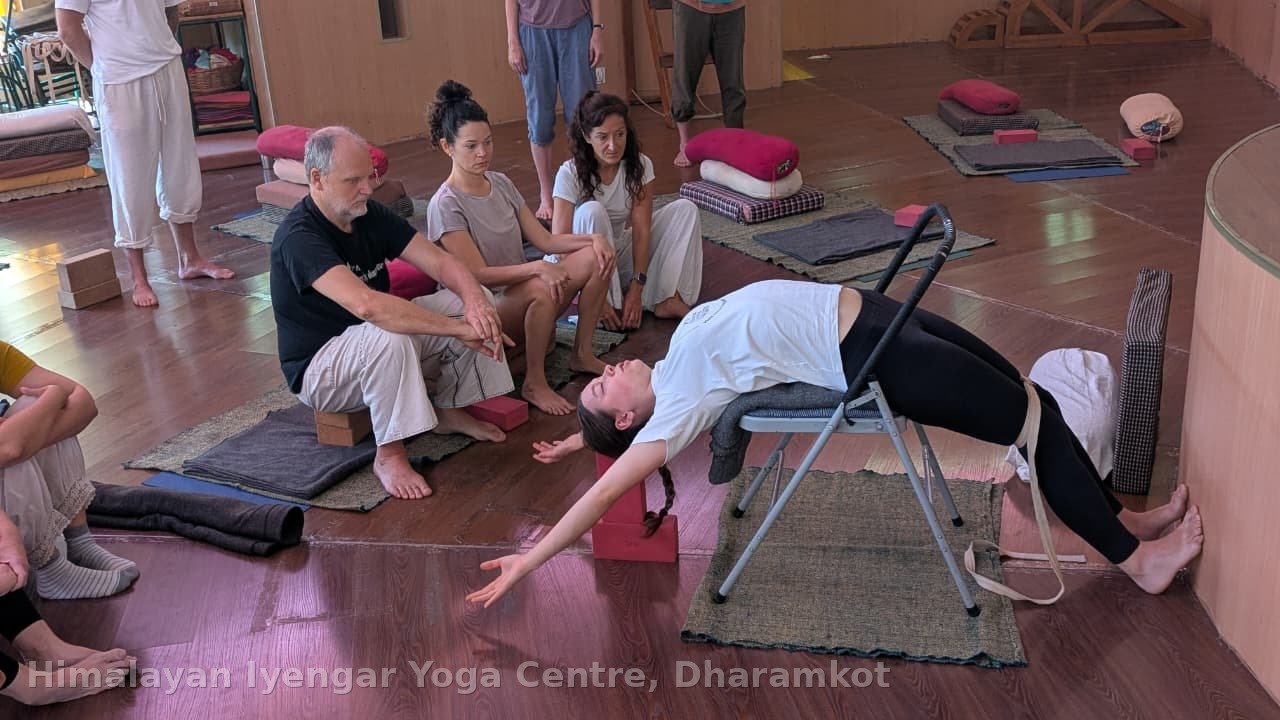
The same rope wall, the same chairs, the same patient attention to the foundations — but also a contemporary studio, refined props and a method shaped by decades more of teaching. These recent photos from HIYC show that same lineage, continuing.
The Sharat Arora Method: Honouring the Roots, Continuing the Journey
Every great tradition grows through observation and experience. While the principles of Iyengar Yoga continue to inspire practitioners around the world, every dedicated teacher also develops a deeper understanding through decades of working with students. This has been the journey of Master Sharat Arora.
After studying directly with B.K.S. Iyengar for seven years, Sharat Arora dedicated his life to teaching yoga. Over more than 45 years, he has worked with thousands of students from different countries, age groups and physical conditions. This lifelong exploration gradually refined his understanding of how the body moves, where unnecessary tension begins, and how yoga can become both more effective and more accessible.
The result is what is now known as the Sharat Arora Yoga Method. Rather than departing from the values of awareness and precision that shaped his early training, this method continues the journey through careful observation of the human body and nervous system. Every refinement has come from decades of teaching, listening and learning. At Himalayan Iyengar Yoga Centre, this is the practice shared with every student.
The Foundations Come First
One of the defining characteristics of the Sharat Arora Method is the importance given to the foundations of every posture.
Instead of concentrating on isolated parts of the body, every action begins from the ground up. The feet, the base of the posture, provide the stability from which the rest of the body can organise itself naturally.
When the foundations are clear and balanced, the spine lengthens without force, wholesome alignment is found naturally, and the breath remains free.
This approach often surprises new students. They discover that they do not need to "pull" themselves into a posture. Instead, the posture gradually unfolds as balance is established from below. Rather than creating effort through isolated muscular actions, the whole body begins working as one integrated system.
No Local Movements That Create Tension
Many people unknowingly create unnecessary effort by trying to move one part of the body independently. For example, they may pull the shoulders back, force the chest upward, tighten the neck, grip the hips, or overuse the lower back in an attempt to achieve what they believe is the "correct" shape.
While these actions may make a posture look impressive from the outside, they often create compression and restrict the natural flow of breath.
The Sharat Arora Method avoids these local movements. Instead, movement develops through balanced action across the entire body. As the foundations become stable, the rest of the posture emerges effortlessly with greater ease. Students frequently notice that poses begin to feel lighter, more spacious and surprisingly comfortable.
The Balance Between Action and Rest
Yoga is often described as the union of opposites — strength and softness, stability and ease, effort and relaxation. This balance lies at the heart of the Sharat Arora Method.
Every posture requires intelligent action, but it also requires rest. If every muscle is working continuously, unnecessary tension builds, breathing becomes restricted, and the nervous system remains under stress.
Instead, students learn to recognise where action is necessary and where it is not. As unnecessary effort falls away, the body becomes quieter. The breath deepens naturally. The mind follows. This is not passive relaxation — it is an active state of balance in which only the muscles that need to work are working.
Free Breath Is Essential
Breath is often described as the bridge between body and mind. When breathing becomes strained, it is usually a sign that something within the posture needs attention.
For this reason, one of the guiding principles at HIYC is that the breath should remain natural throughout the practice. Students are never encouraged to sacrifice breathing in order to achieve a deeper stretch or a more advanced position. Instead, every adjustment supports free breath.
As the breath becomes unrestricted, practitioners often experience greater mental clarity, emotional steadiness and a deeper sense of calm. The posture no longer feels like something to endure. It becomes something to embody and enjoy.
Who Can Benefit From This Practice?
One of the greatest strengths of this approach is its accessibility. You do not need to be young, athletic or naturally flexible to begin.
Students at HIYC come from many different backgrounds. Some have never attended a yoga class before. Others have spent years practising different styles and are looking for a deeper understanding of movement and alignment.
The practice can benefit:
- Complete beginners — see our 5-Day Weekend Classes
- Experienced yoga practitioners looking to deepen their practice through our 320-Hour Teacher Training
- Office workers with postural tension
- People seeking healthier movement patterns
- Active individuals wanting greater body awareness
- Anyone looking for a thoughtful, wholesome yoga practice
Why Study in the Himalayas?
The Himalayas have attracted seekers for centuries. Their quiet landscapes invite reflection and simplicity in a way that is difficult to find in everyday life. If you're planning a trip, our complete guide to yoga in Dharamshala covers where to stay, when to visit, and what to expect.
Practising yoga here is not simply about changing locations. It is about creating the space to observe yourself more clearly. Away from constant distractions, students often find that both their practice and their understanding deepen naturally.
At Himalayan Iyengar Yoga Centre, this environment is combined with decades of teaching experience and a commitment to individual attention. Students can stay on-site at our HIYC accommodation, just steps from the practice hall. Rather than encouraging students to achieve more postures, the focus remains on helping each person develop a practice they can carry into everyday life.
Frequently Asked Questions
Is the Sharat Arora Method the same as Iyengar Yoga?
The Sharat Arora Method has its roots in Master Sharat Arora's years of study with B.K.S. Iyengar. Over more than four decades of teaching, observation and refinement, he developed his own approach while maintaining the values of awareness, precision and respect for the individual body and mind. If you're comparing training programmes, our guide on how to choose a yoga teacher training in India covers what to look for in a teacher's lineage and experience.
Do I need previous yoga experience?
Not at all. Many students begin with no prior experience — our 9-Day Immersion is a popular starting point. Every posture can be adapted according to your current ability.
Is this practice suitable if I am not flexible?
Yes. Flexibility may develop through practice. It is not a requirement for beginning.
Will we use props?
Props will be used to help students experience the fullness of a posture with intelligence. They are teaching tools, and necessary for wholesome alignment.
What should I expect from my first class?
Expect a slower, more thoughtful experience than many modern yoga classes. You will learn how to establish strong foundations, observe your movement, and breathe freely without unnecessary effort. For more, see our full FAQ page.
A Journey That Continues
Yoga has always been more than a collection of postures. It is a practice of observation — a way of understanding ourselves through movement, breath and awareness.
The contribution of B.K.S. Iyengar transformed the lives of countless practitioners and established one of the world's most respected approaches to yoga. His emphasis on precision, discipline and mindful practice continues to inspire students across generations. At Himalayan Iyengar Yoga Centre, that legacy is honoured with deep gratitude.
The Sharat Arora Method grows from those foundations while reflecting more than 45 years of continued exploration, teaching and direct experience. By avoiding local movements that create tension, working with awareness in foundations, balancing action with rest, and allowing the breath to remain free, the practice invites students to experience yoga not as a struggle, but as a process of discovery.
Whether you are stepping onto the mat for the first time or returning after years of practice, the journey begins in the same place: with awareness. And from awareness, everything else unfolds naturally.
Study the Sharat Arora Method in the Himalayas
Experience the practice described in this article at the Himalayan Iyengar Yoga Centre in Dharamkot, Dharamsala.