Modern life moves fast. We sit for long hours, we look at screens from morning till night, and we carry more worry than our grandparents ever did. Many people come to yoga hoping to fix a stiff back or a tired mind. What has come to be called the Sharat Arora Method is not a trick for either. It is a simple way of practising and living, and I believe it speaks to the way we live today more than ever. Let me explain it, step by step.
In Short
- The method begins with the foundation: the feet and the hands, and from there, alignment.
- You start from where you are. Flexibility is not a requirement, and there is nothing to show off.
- Ethics come before asana. Yama and niyama are the base of the practice.
- Asana is a way of reading your own body and mind.
- The main path is inward. Without it, changes stay on the surface.
- Yoga works alongside medicine. It is not a panacea.
Where It Comes From
I found yoga in 1978. I then spent seven years in full-time training with Guruji B.K.S. Iyengar in Pune, assisting in asana classes at every level. Equally important for me were the daily therapy sessions, where I worked with many people in real difficulty. That experience, together with my study of medicine, shaped the way I teach and look at healing. The yoga practised at our centre is an evolution of the Iyengar tradition I received.
1. Foundation: Reconnecting with the Ground
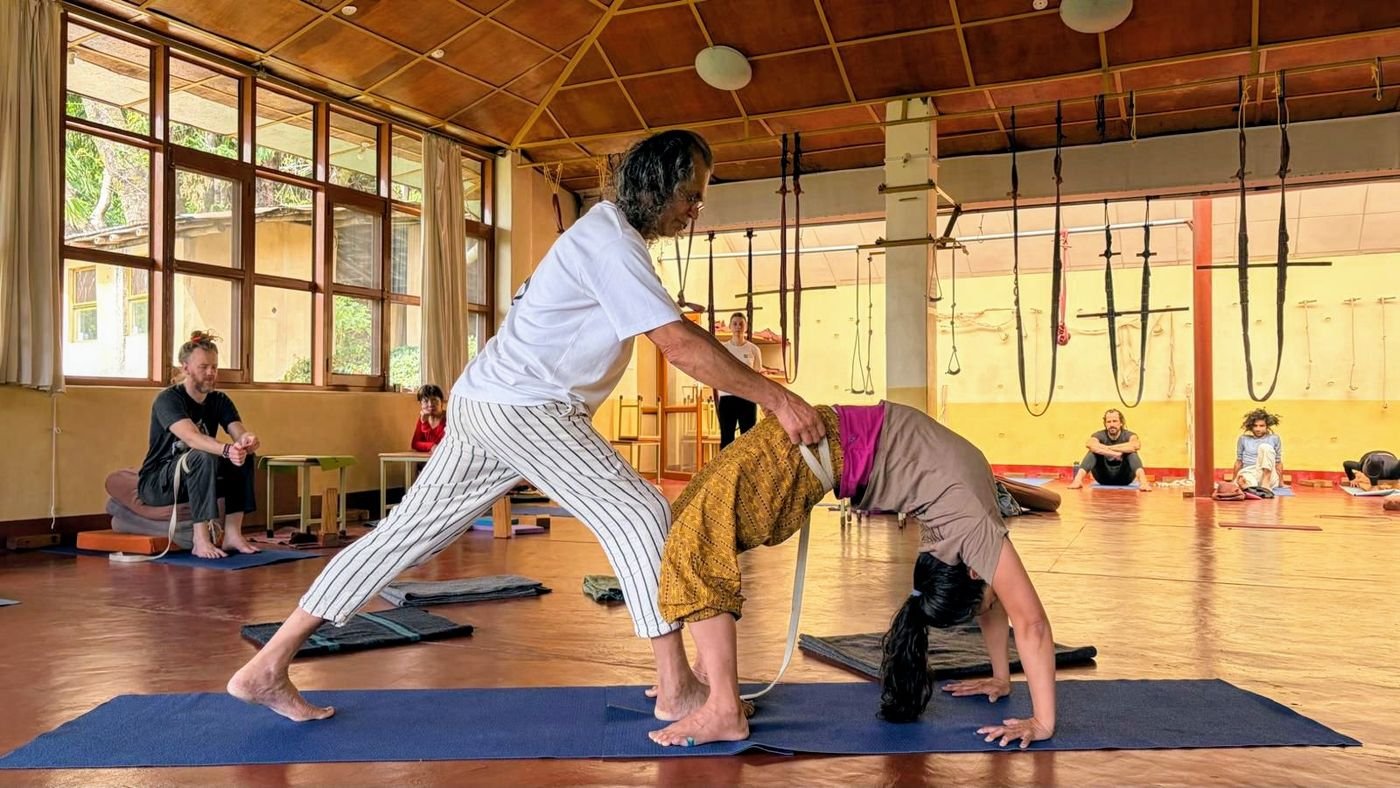
Every asana has a base. In a standing pose it is the feet. In an arm balance or backbend it is the hands. When the base is sound, the asana grows from it and alignment is found. In my exploration I came to see how important this is, and so much of our work is with the feet and the hands.
Why it matters today. Our feet spend most of the day in shoes, and our hands on keyboards and phones. We lose touch with the very parts of the body that connect us to the world. The feet and hands are full of sensory receptors, and the brain uses what they report to judge balance and position. Waking them up gives the whole body better information. It also trains the mind to rest on one clear point, something that is hard to do when attention is pulled in a dozen directions.
2. Start Where You Are
Flexibility is not a requirement for yoga. It is a requirement only if you want to show off. You begin from where you are and try to understand your body, not force it into a shape. If you practise violently, you get violence back, and it affects how you deal with everything else in life.
Why it matters today. Pictures of impossible poses are everywhere, and it is easy to feel behind before you have even begun. This teaching removes the pressure. There is no performance and no comparison. Patanjali says the asana should be steady and comfortable and is perfected by relaxing effort (Sutras 2.46 and 2.47). For a generation that is always pushing, that is a refreshing instruction.
3. Ethics Before Asana
The process begins with the universal rules, called dharma, and these should be understood before the asana practice. In the Yoga Sutras they are the yamas and niyamas. They are rules of alignment with oneself, and they bring balance in body and mind and show up in daily life. Applying them is what makes the practice spiritual and not just physical. Unfortunately, few people teach yoga as a path to spiritual life. It has become mostly a way to be healthy, flexible and strong, and I think we need some education in what yoga really is.
Why it matters today. Yoga is now sold as exercise, as a product, even as a look. Without ethics it is easy to become stronger and more flexible, and no calmer or kinder. The yamas and niyamas bring the practice back into how we speak, work, eat and treat others.
4. Asana as a Mirror
Asanas bring a balanced body, and they also help us understand, energetically, the state of our body and mind right now. In that sense, practice becomes a way of reading ourselves. A good practice also takes into account how people think today, and shapes the asana work to meet them there.
Why it matters today. Many of us are so busy that we ignore what the body says until it hurts. Researchers call the ability to sense what is happening inside the body interoception, and it is linked to emotional awareness. Learning to feel tension in a pose is also training in noticing stress before it takes over the day.
5. The Path Goes Inward
The main path of yoga is going within: looking honestly at yourself, being sensitive, and feeling what is actually going on. Without it, change is only on the surface. Even improving physical health is quite superficial, because yoga has far deeper benefits for those who go inward.
Many people come with a physical problem and benefit greatly in a short time. But only some see that the suffering they carry each day is a byproduct of their own reality, and that steady practice can teach them to drop it and be free. The Gita says: lift yourself by your own self, and do not let yourself sink (6.5).
Why it matters today. Our days are full of noise: notifications, news, messages. Yoga calls the turning of the senses inward pratyahara, the fifth limb (Sutra 2.54). Going within is not an escape from modern life. It is how we stay steady inside it.
6. A Regular Rhythm of Life
Yoga is not a cure for everything. It is a way of life, and it includes eating well, thinking well and following a regular daily rhythm. The Bhagavad Gita says the same: yoga becomes the destroyer of sorrow for one who is moderate in food and recreation, balanced in action, and regular in sleeping and waking (6.17).
Why it matters today. Late nights, skipped meals and irregular schedules are common, and research links irregular sleep and eating with poorer mood and health. A steady rhythm is one of the simplest forms of self-care, and yoga asks us to start there.
7. Yoga and Medicine, Side by Side
Doctors treat the symptoms in the body, and it would help greatly if they also understood the role of the mind and way of life. We have had doctors come to learn yoga, and they have shared knowledge from their own field. I believe both sides can learn from each other for the benefit of people. But yoga is not a panacea, and it should work with medicine, not against it.
Why it matters today. With so many wellness claims around, this is a healthy and honest position. If you have a health condition, practise under a qualified teacher and keep your doctor informed.
Who Is It For?
There is no age restriction for yoga, but you must be physically willing to practise. Most of our courses are for people with small imbalances. If the imbalance is large, you need a programme suited to you alone. Many people begin with our five-day course.
Frequently Asked Questions
No. Begin from where you are and try to understand your body.
No. Many people begin with a physical problem, but the deeper benefit comes from going within.
No. Yoga is not a panacea. It works best alongside medicine, not instead of it.
Pay attention to your feet and hands, go gently, live with ethics and moderation, and make a little time to look within.
Closing
Stand on a sound base. Go gently. Live well. Turn your attention inward. In a time of speed and noise, these four simple things may be the most useful teaching I can offer.
To learn more about the courses, please use the Contact page of this website.
आधुनिक जीवन तेज़ चलता है। हम घंटों बैठे रहते हैं, सुबह से रात तक स्क्रीन देखते हैं, और अपने दादा-दादी की तुलना में कहीं अधिक चिंता ढोते हैं। बहुत लोग योग के पास अकड़ी हुई पीठ या थके हुए मन को ठीक करने की आशा से आते हैं। जिसे अब शरत अरोड़ा पद्धति कहा जाने लगा है, वह इनमें से किसी की कोई युक्ति नहीं है। वह अभ्यास और जीने का एक सरल ढंग है, और मेरा विश्वास है कि वह आज हमारे जीने के ढंग से पहले से कहीं अधिक बात करता है। मैं उसे चरण-दर-चरण समझाता हूँ।
संक्षेप में
- पद्धति आधार से शुरू होती है: पैर और हाथ, और वहाँ से संरेखण।
- आप जहाँ हैं वहीं से शुरू करते हैं। लचीलापन शर्त नहीं है, और दिखाने को कुछ नहीं है।
- आसन से पहले नैतिकता आती है। यम और नियम अभ्यास की नींव हैं।
- आसन अपने शरीर और मन को पढ़ने का तरीका है।
- मुख्य मार्ग भीतर की ओर है। उसके बिना बदलाव सतह पर रहते हैं।
- योग चिकित्सा के साथ काम करता है। वह रामबाण नहीं है।
यह कहाँ से आती है
मैंने 1978 में योग को पाया। फिर मैंने पुणे में गुरुजी बी.के.एस. आयंगर के साथ सात वर्ष पूर्णकालिक प्रशिक्षण लिया, जहाँ मैंने हर स्तर की आसन कक्षाओं में सहायता की। मेरे लिए उतने ही महत्वपूर्ण वे दैनिक चिकित्सा सत्र थे, जहाँ मैंने वास्तविक कठिनाई में पड़े बहुत लोगों के साथ काम किया। उस अनुभव ने, चिकित्सा के मेरे अध्ययन के साथ, मेरे पढ़ाने और उपचार को देखने के ढंग को आकार दिया। हमारे केंद्र में जो योग किया जाता है, वह उस आयंगर परंपरा का विकास है जो मुझे मिली।
1. आधार: धरती से फिर जुड़ना
हर आसन का एक आधार होता है। खड़े आसन में वह पैर हैं। भुजाओं के संतुलन या पीछे झुकने वाले आसन में हाथ। जब आधार सुदृढ़ होता है, तो आसन उससे विकसित होता है और संरेखण मिलता है। अपनी खोज में मैंने देखा कि यह कितना महत्वपूर्ण है, और इसीलिए हमारा बहुत काम पैरों और हाथों के साथ है।
आज यह क्यों मायने रखता है। हमारे पैर दिन का अधिकांश समय जूतों में रहते हैं, और हाथ कीबोर्ड और फ़ोन पर। हम शरीर के उन्हीं अंगों से संपर्क खो देते हैं जो हमें दुनिया से जोड़ते हैं। पैरों और हाथों में संवेदी ग्राहक भरे होते हैं, और मस्तिष्क संतुलन और स्थिति का अनुमान लगाने के लिए उनकी रिपोर्ट का उपयोग करता है। उन्हें जगाने से पूरे शरीर को बेहतर जानकारी मिलती है। यह मन को एक स्पष्ट बिंदु पर टिकाने का प्रशिक्षण भी है, जो तब कठिन होता है जब ध्यान दर्जन दिशाओं में खिंचता है।
2. जहाँ हैं वहीं से शुरू करें
योग के लिए लचीलापन शर्त नहीं है। वह तभी शर्त है जब आप दिखावा करना चाहें। आप वहीं से शुरू करते हैं जहाँ आप हैं और अपने शरीर को समझने की कोशिश करते हैं, उसे किसी आकार में ज़बरदस्ती नहीं मोड़ते। अगर आप हिंसक ढंग से अभ्यास करेंगे, तो हिंसा ही लौटकर आएगी, और वह जीवन में बाक़ी सब से निपटने के आपके ढंग को प्रभावित करेगी।
आज यह क्यों मायने रखता है। असंभव आसनों की तस्वीरें हर जगह हैं, और शुरू करने से पहले ही पीछे महसूस करना आसान है। यह शिक्षा दबाव हटा देती है। न प्रदर्शन है, न तुलना। पतंजलि कहते हैं कि आसन स्थिर और सुखद होना चाहिए और वह प्रयत्न को शिथिल करने से सिद्ध होता है (सूत्र 2.46 और 2.47)। जो पीढ़ी हमेशा धकेलती रहती है, उसके लिए यह एक ताज़गी भरा निर्देश है।
3. आसन से पहले नैतिकता
प्रक्रिया सार्वभौमिक नियमों से शुरू होती है, जिन्हें धर्म कहा गया है, और इन्हें आसन अभ्यास से पहले समझना चाहिए। योगसूत्र में ये यम और नियम हैं। ये स्वयं के साथ संरेखण के नियम हैं, और ये शरीर और मन में संतुलन लाते हैं और दैनिक जीवन में दिखते हैं। इन्हें लागू करना ही अभ्यास को आध्यात्मिक बनाता है, केवल शारीरिक नहीं। दुर्भाग्य से बहुत कम लोग योग को आध्यात्मिक जीवन के मार्ग के रूप में सिखाते हैं। वह अधिकतर स्वस्थ, लचीले और मज़बूत रहने का साधन बन गया है, और मुझे लगता है कि हमें इस बात की कुछ शिक्षा चाहिए कि योग वास्तव में है क्या।
आज यह क्यों मायने रखता है। योग अब व्यायाम के रूप में, उत्पाद के रूप में, यहाँ तक कि एक रूप-रंग के रूप में बेचा जाता है। नैतिकता के बिना अधिक मज़बूत और लचीला होना आसान है, पर अधिक शांत या दयालु नहीं। यम और नियम अभ्यास को वापस इस पर ले आते हैं कि हम कैसे बोलते, काम करते, खाते और दूसरों से व्यवहार करते हैं।
4. दर्पण के रूप में आसन
आसन संतुलित शरीर देते हैं, और वे हमें इस क्षण अपने शरीर और मन की स्थिति को ऊर्जा के स्तर पर समझने में भी मदद करते हैं। इस अर्थ में अभ्यास स्वयं को पढ़ने का एक तरीका बन जाता है। अच्छा अभ्यास यह भी ध्यान में रखता है कि आज लोग कैसे सोचते हैं, और आसन के काम को उन्हें वहीं मिलने के लिए ढालता है।
आज यह क्यों मायने रखता है। हम में से बहुत लोग इतने व्यस्त हैं कि शरीर जो कहता है, उसे दर्द होने तक अनदेखा करते हैं। शोधकर्ता शरीर के भीतर क्या हो रहा है, इसे महसूस करने की क्षमता को इंटरोसेप्शन कहते हैं, और इसका संबंध भावनात्मक जागरूकता से है। आसन में तनाव को महसूस करना सीखना, तनाव के दिन पर हावी होने से पहले उसे पहचानने का प्रशिक्षण भी है।
5. मार्ग भीतर की ओर जाता है
योग का मुख्य मार्ग भीतर जाना है: अपने आप को ईमानदारी से देखना, संवेदनशील होना और महसूस करना कि वास्तव में क्या चल रहा है। इसके बिना बदलाव केवल सतह पर होता है। शारीरिक स्वास्थ्य का सुधार भी काफ़ी सतही है, क्योंकि जो भीतर जाते हैं, उनके लिए योग के लाभ कहीं अधिक गहरे हैं।
बहुत लोग किसी शारीरिक समस्या के साथ आते हैं और थोड़े समय में बहुत लाभ पाते हैं। पर कुछ ही देख पाते हैं कि जो पीड़ा वे रोज़ ढोते हैं, वह उनकी अपनी वास्तविकता का उप-उत्पाद है, और निरंतर अभ्यास उन्हें उसे छोड़ना और मुक्त होना सिखा सकता है। गीता कहती है: अपने द्वारा अपना उद्धार करो, अपने को गिरने मत दो (6.5)।
आज यह क्यों मायने रखता है। हमारे दिन शोर से भरे हैं: नोटिफ़िकेशन, ख़बरें, संदेश। योग इंद्रियों के भीतर मुड़ने को प्रत्याहार कहता है, पाँचवाँ अंग (सूत्र 2.54)। भीतर जाना आधुनिक जीवन से पलायन नहीं है। वह वही तरीका है जिससे हम उसके भीतर स्थिर रहते हैं।
6. जीवन की नियमित लय
योग हर चीज़ का इलाज नहीं है। वह जीवन जीने का ढंग है, जिसमें अच्छा खाना, अच्छा सोचना और नियमित दैनिक लय रखना शामिल है। भगवद्गीता भी यही कहती है: जो आहार और विहार में संयमी है, कर्मों में संतुलित है और सोने-जागने में नियमित है, उसके लिए योग दुःख का नाश करने वाला हो जाता है (6.17)।
आज यह क्यों मायने रखता है। देर रातें, छूटे भोजन और अनियमित दिनचर्या आम हैं, और शोध अनियमित नींद और खान-पान को बिगड़े मूड और स्वास्थ्य से जोड़ते हैं। एक स्थिर लय आत्म-देखभाल के सबसे सरल रूपों में से एक है, और योग हमसे वहीं से शुरू करने को कहता है।
7. योग और चिकित्सा, साथ-साथ
डॉक्टर शरीर के लक्षणों का इलाज करते हैं, और यदि वे मन और जीवन-शैली की भूमिका को भी समझें तो बहुत सहायता होगी। हमारे पास डॉक्टर योग सीखने आए हैं, और उन्होंने अपने क्षेत्र का ज्ञान साझा किया है। मेरा विश्वास है कि दोनों पक्ष लोगों की भलाई के लिए एक-दूसरे से सीख सकते हैं। पर योग रामबाण नहीं है, और उसे चिकित्सा के साथ काम करना चाहिए, उसके विरुद्ध नहीं।
आज यह क्यों मायने रखता है। इतने स्वास्थ्य-दावों के बीच यह एक स्वस्थ और ईमानदार रुख़ है। यदि आपको कोई स्वास्थ्य समस्या है, तो योग्य शिक्षक के साथ अभ्यास करें और अपने डॉक्टर को सूचित रखें।
यह किसके लिए है?
योग के लिए कोई आयु प्रतिबंध नहीं है, पर आपको अभ्यास के लिए शारीरिक रूप से तैयार होना चाहिए। हमारे अधिकतर पाठ्यक्रम छोटे असंतुलन वाले लोगों के लिए हैं। यदि असंतुलन बड़ा है, तो आपको केवल आपके अनुरूप कार्यक्रम चाहिए। बहुत लोग हमारे पाँच-दिवसीय पाठ्यक्रम से शुरुआत करते हैं।
अक्सर पूछे जाने वाले प्रश्न
नहीं। जहाँ हैं वहीं से शुरू करें और अपने शरीर को समझने की कोशिश करें।
नहीं। बहुत लोग शारीरिक समस्या से शुरू करते हैं, पर गहरा लाभ भीतर जाने से आता है।
नहीं। योग रामबाण नहीं है। वह चिकित्सा के साथ सबसे अच्छा काम करता है, उसकी जगह नहीं।
अपने पैरों और हाथों पर ध्यान दें, कोमलता से चलें, नैतिकता और संयम से जिएँ, और भीतर देखने के लिए थोड़ा समय निकालें।
समापन
सुदृढ़ आधार पर खड़े हों। कोमलता से चलें। अच्छे से जिएँ। ध्यान को भीतर की ओर मोड़ें। गति और शोर के इस समय में, ये चार सरल बातें शायद सबसे उपयोगी शिक्षा हैं जो मैं दे सकता हूँ।
पाठ्यक्रमों के बारे में अधिक जानने के लिए कृपया इस वेबसाइट का “संपर्क” पृष्ठ देखें।
Experience Iyengar Yoga in the Himalayas
Learn the precise, attentive Iyengar method with Master Yoga Teacher Sharat Arora in Dharamkot.