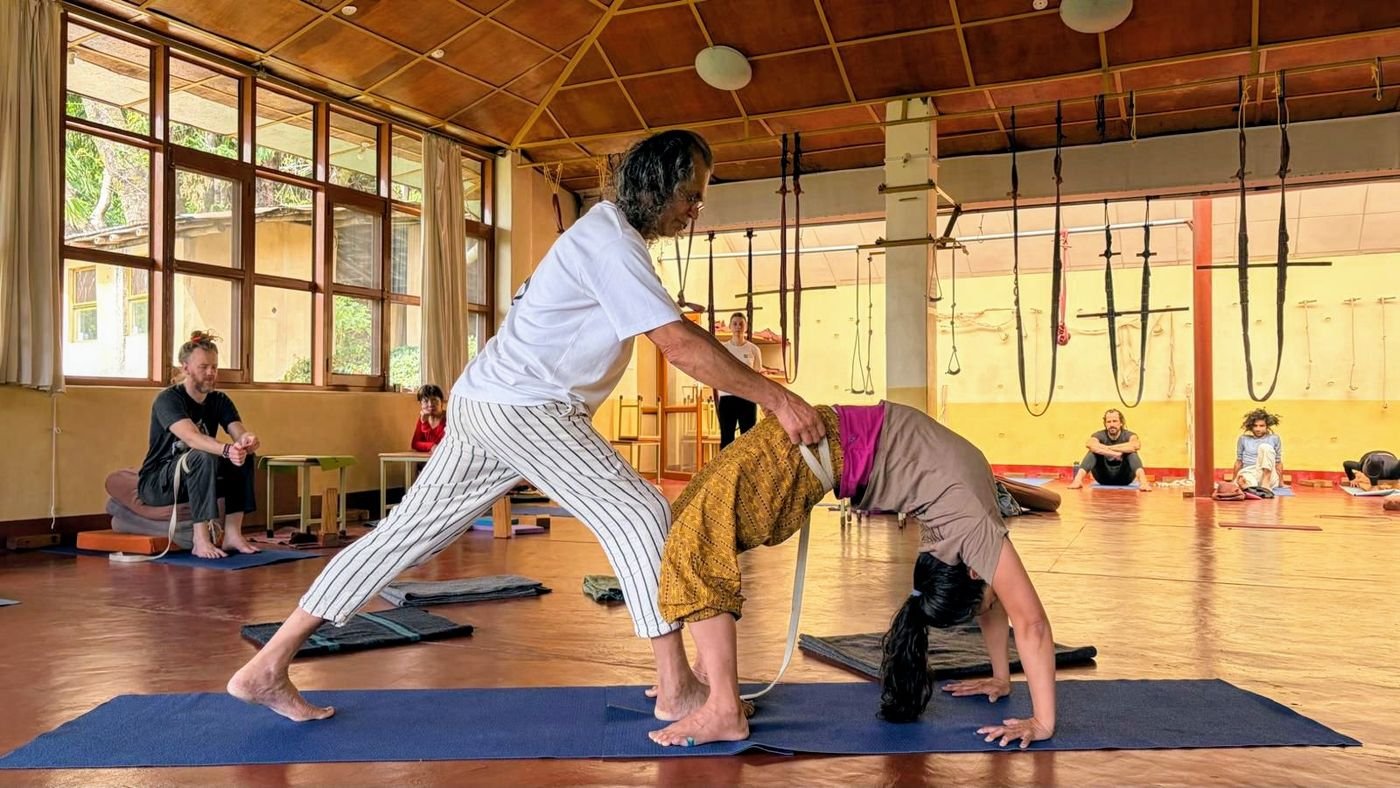
Ask ten people what they are doing in a yoga pose and you will get ten answers: stretching, holding, trying not to fall over, waiting for it to end. Rarely will anyone say they are in a state. Yet the old teachers spoke of asana in exactly that way, as a condition of body and mind and not only a shape of the limbs. A good posture practice can be described by four qualities that arrive together: action, relaxation, freedom and enjoyment. Let us look at each, and at how they fit.
In Short
- Action: a precise, intelligent effort that wakes up the body and the mind.
- Relaxation: letting go of every bit of effort that is not needed.
- Freedom: the mind no longer pulled between pairs of opposites such as comfort and pain.
- Enjoyment: the quiet happiness that comes from steadiness and contentment.
- Patanjali's Sutras 2.46 to 2.48 describe all of this in three short lines.
The Foundation: What Patanjali Says About Asana
Sutra 2.46: Sthira-sukham asanam. Asana is steady and comfortable.
Sutra 2.47: Prayatna-shaithilya-ananta-samapattibhyam. It is perfected by relaxing effort and resting the mind on the infinite. Sutra 2.48: Tato dvandva-anabhighatah. From this, one is not disturbed by the pairs of opposites.
Read together, the three sutras describe a sequence. First there is firmness and ease (sthira and sukha). Then comes the relaxing of effort, with attention resting on something larger than the body. Finally there is freedom from being thrown about by heat and cold, pleasure and pain. B.K.S. Iyengar, writing on this subject, described the first of these as firmness of the body, steadiness of intelligence and kindness of spirit, and said that these two sutras should be remembered whenever asanas are practised. He also wrote that each asana engages the body's action, the awareness of its results, the mind, the intelligence and the spirit. That is a rich view of what happens in a pose.
1. Action: Effort with Intelligence
A pose begins with action. Muscles work, joints move, the feet press, the arms reach. But the action of yoga is not blind force. It is attentive and exact. Where does the weight go? What lifts? What stays quiet? This is what the Bhagavad Gita calls yogah karmasu kaushalam, skill in action (2.50). Iyengar's own phrase for it was that each movement should be an art, creating space in every direction.
There is also a quiet second layer. While we act, we observe the result of our action, and this watching is the beginning of concentration and meditation in the pose. So the first quality is not only doing, it is doing with awareness.
What science adds. Learning a movement well depends on feedback. When we attend to how a posture feels, we help the brain refine it, in the same way a musician improves by listening.
2. Relaxation: Removing What Is Not Needed
This is the part most people miss. After the action is established, the next step is to release every bit of effort that does not belong. Look at your face, your jaw, the eyes, the shoulders and the breath. In many poses we grip with muscles that have no job to do. Holding an asana for a time makes this visible, because the places carrying extra tension begin to complain.
Iyengar's advice was to relax, not clench, as you stretch, to relax the eyes, and to let relaxation begin at the outer layer of the body and travel deeper. He spoke of the exhalation as the moment of release, and he compared the ideal to a cat that stretches and lets go with ease. This is Sutra 2.47 in practice: relax the effort.
What science adds. Needless muscle tension costs energy and keeps the nervous system on alert. A slow, full exhalation is widely taught as a way to signal the body that it is safe to settle, and many people notice that their breathing and their tension ease together.
3. Freedom: Not Disturbed by Opposites
When action and relaxation work together, something shifts. The mind stops swinging between comfortable and uncomfortable, wanting and resisting. Sutra 2.48 calls this freedom from the pairs of opposites. Iyengar described it as perfection in action and freedom in consciousness: a state where the mind, which usually divides experience into pleasant and painful, stops disturbing the practitioner.
This does not mean being numb. It means that sensations can arise and pass without taking over. In a long pose a strong sensation does not become a drama. You simply notice it and stay steady. That is a small taste of what yoga means by freedom, and it travels well into daily life.
What science adds. Research on mindfulness suggests that observing sensations without reacting to them can reduce the distress they cause, although the effects differ between people.
4. Enjoyment: The Taste of Steadiness
The fourth quality is easy to overlook, because many people treat practice as a chore. But the word sukha in Sutra 2.46 means ease and also happiness. Patanjali says elsewhere that contentment brings unsurpassed happiness (Sutra 2.42). Iyengar encouraged practitioners to savour the asana, to feel beauty, liberation and spaciousness in it, and, in his words, to enjoy.
The Taittiriya Upanishad says that the essence of existence is joy (raso vai sah), and that one who finds it becomes blissful. A posture practised well is a small door to that taste. It is not excitement. It is a clear, light happiness that comes when the body is steady and the mind is quiet.
What science adds. People tend to keep up the activities they enjoy. If practice feels like punishment, it rarely lasts. If it feels like a quiet pleasure, it becomes a habit.
How the Four Work Together
These four are not steps to be ticked off one by one. They are qualities that deepen together:
- Without action, relaxation turns into collapse.
- Without relaxation, action turns into strain.
- Without freedom, we stay trapped in liking and disliking.
- Without enjoyment, the practice dries up.
When all four are present, the posture feels light and still, even in a demanding pose. Iyengar described this as lightness in the body and freedom in the mind.
Signs That You Are in the State
- Your breath is smooth and your face is soft.
- You can feel what is working and what is quiet.
- Strong sensations come and go without alarming you.
- You feel a quiet sense of pleasure and steadiness.
- You come out of the pose clearer, not drained.
Frequently Asked Questions
Yes. The aim is to remove only the unnecessary effort. The needed action stays, and everything else softens.
Yes. The Sutras describe a posture as steady and comfortable, and ease and happiness are part of the aim, not a bonus.
Discomfort and pain are different. Sharp or joint pain is a signal to ease off. Practise gently, and under a qualified teacher if you have a health condition.
Sutras 2.46, 2.47 and 2.48 are the main ones, with 2.42 on contentment.
Closing Thought
When we practise a posture, we are not only shaping the body. We are learning how to act without strain, rest without sinking, stay free of the swing between likes and dislikes, and find a little joy in being steady. These are skills for the mat, and they are also skills for life.
Related reading: Abhyasa and Vairagya, the Two Wings of a Steady Mind.
To learn more about our classes, please use the Contact page of this website.
दस लोगों से पूछिए कि योग के किसी आसन में वे क्या कर रहे हैं, तो दस उत्तर मिलेंगे: खींच रहा हूँ, टिका हूँ, गिरने से बचने की कोशिश कर रहा हूँ, इंतज़ार कर रहा हूँ कि कब ख़त्म हो। शायद ही कोई कहे कि वह एक अवस्था में है। फिर भी प्राचीन गुरु आसन को ठीक इसी तरह बताते थे, शरीर और मन की एक स्थिति के रूप में, केवल अंगों के आकार के रूप में नहीं। अच्छे आसन अभ्यास को चार गुणों से बताया जा सकता है जो साथ-साथ आते हैं: क्रिया, शिथिलता, स्वतंत्रता और आनंद। आइए हर एक को देखें, और यह भी कि वे कैसे जुड़ते हैं।
संक्षेप में
- क्रिया: सटीक, बुद्धिमत्तापूर्ण प्रयास जो शरीर और मन को जगाता है।
- शिथिलता: उस हर प्रयास को छोड़ देना जिसकी ज़रूरत नहीं है।
- स्वतंत्रता: मन का आराम और पीड़ा जैसे द्वंद्वों के बीच खिंचा न रहना।
- आनंद: वह शांत सुख जो स्थिरता और संतोष से आता है।
- पतंजलि के सूत्र 2.46 से 2.48 यह सब तीन छोटी पंक्तियों में बताते हैं।
आधार: पतंजलि आसन के बारे में क्या कहते हैं
सूत्र 2.46: स्थिरसुखमासनम्। आसन स्थिर और सुखद होता है। सूत्र 2.47: प्रयत्नशैथिल्यानन्तसमापत्तिभ्याम्। वह प्रयत्न की शिथिलता और अनंत पर मन टिकाने से सिद्ध होता है।
सूत्र 2.48: ततो द्वन्द्वानभिघातः। उससे द्वंद्वों (विपरीत जोड़ों) से आघात नहीं होता।
साथ पढ़ने पर ये तीनों सूत्र एक क्रम बताते हैं। पहले दृढ़ता और सहजता है (स्थिर और सुख)। फिर प्रयत्न का शिथिल होना आता है, जिसमें ध्यान शरीर से बड़ी किसी चीज़ पर टिकता है। अंत में गर्मी-सर्दी, सुख-दुःख से झकझोरे जाने से मुक्ति है। बी.के.एस. आयंगर ने इस विषय पर लिखते हुए पहले को शरीर की दृढ़ता, बुद्धि की स्थिरता और आत्मा की दयालुता कहा, और कहा कि जब भी आसन किए जाएँ तो ये दो सूत्र याद रखने चाहिए। उन्होंने यह भी लिखा कि हर आसन शरीर की क्रिया, उसके परिणाम की जागरूकता, मन, बुद्धि और आत्मा को संलग्न करता है। आसन में जो होता है, यह उसका समृद्ध दृष्टिकोण है।
1. क्रिया: बुद्धिमत्ता के साथ प्रयास
आसन क्रिया से शुरू होता है। माँसपेशियाँ काम करती हैं, जोड़ हिलते हैं, पैर दबते हैं, भुजाएँ फैलती हैं। पर योग की क्रिया अंधा बल नहीं है। वह सजग और सटीक है। भार कहाँ जाता है? क्या उठता है? क्या शांत रहता है? भगवद्गीता इसे योगः कर्मसु कौशलम् कहती है, कर्म में कुशलता (2.50)। आयंगर का अपना वाक्य था कि हर गति एक कला होनी चाहिए, जो हर दिशा में स्थान बनाए।
एक शांत दूसरी परत भी है। जब हम क्रिया करते हैं, तो हम अपनी क्रिया के परिणाम को देखते हैं, और यह देखना ही आसन में धारणा और ध्यान की शुरुआत है। इसलिए पहला गुण केवल करना नहीं है, वह जागरूकता के साथ करना है।
विज्ञान क्या जोड़ता है। किसी गति को अच्छी तरह सीखना प्रतिक्रिया पर निर्भर करता है। जब हम ध्यान देते हैं कि आसन कैसा महसूस हो रहा है, तो हम मस्तिष्क को उसे परिष्कृत करने में मदद देते हैं, जैसे संगीतकार सुनकर सुधरता है।
2. शिथिलता: जो ज़रूरी नहीं उसे हटाना
यही वह भाग है जिसे ज़्यादातर लोग चूक जाते हैं। क्रिया स्थापित होने के बाद अगला कदम उस हर प्रयास को छोड़ना है जो वहाँ का नहीं है। अपने चेहरे, जबड़े, आँखों, कंधों और श्वास को देखिए। बहुत से आसनों में हम उन माँसपेशियों से जकड़ते हैं जिनका कोई काम नहीं। आसन को कुछ देर थामने से यह दिखने लगता है, क्योंकि जिन जगहों पर अतिरिक्त तनाव है, वे शिकायत करने लगती हैं।
आयंगर की सलाह थी कि खिंचाव में कसें नहीं, शिथिल रहें, आँखों को ढीला करें, और शिथिलता को शरीर की बाहरी परत से शुरू होकर गहराई तक जाने दें। उन्होंने निःश्वास को मुक्ति का क्षण बताया, और आदर्श की तुलना उस बिल्ली से की जो सहजता से खिंचती और छोड़ देती है। यही सूत्र 2.47 का अभ्यास है: प्रयत्न को शिथिल करो।
विज्ञान क्या जोड़ता है। अनावश्यक माँसपेशीय तनाव ऊर्जा खर्च करता है और तंत्रिका तंत्र को सतर्क रखता है। धीमा, पूर्ण निःश्वास व्यापक रूप से शरीर को संकेत देने का तरीका सिखाया जाता है कि बैठना सुरक्षित है, और बहुत लोग पाते हैं कि उनकी श्वास और तनाव साथ-साथ ढीले पड़ते हैं।
3. स्वतंत्रता: द्वंद्वों से अप्रभावित
जब क्रिया और शिथिलता साथ काम करती हैं, तो कुछ बदलता है। मन आरामदायक और असुविधाजनक, चाहने और विरोध करने के बीच झूलना बंद कर देता है। सूत्र 2.48 इसे द्वंद्वों से मुक्ति कहता है। आयंगर ने इसे कर्म में पूर्णता और चेतना में स्वतंत्रता बताया: एक अवस्था जहाँ मन, जो आमतौर पर अनुभव को सुखद और पीड़ादायक में बाँटता है, साधक को विचलित करना बंद कर देता है।
इसका अर्थ सुन्न होना नहीं है। इसका अर्थ है कि संवेदनाएँ बिना हावी हुए उठ और बीत सकती हैं। लंबे आसन में तेज़ संवेदना नाटक नहीं बनती। आप बस उसे देखते हैं और स्थिर रहते हैं। यह योग जिसे स्वतंत्रता कहता है, उसका एक छोटा स्वाद है, और यह दैनिक जीवन में अच्छी तरह साथ जाता है।
विज्ञान क्या जोड़ता है। सजगता पर शोध बताते हैं कि संवेदनाओं को प्रतिक्रिया दिए बिना देखना उनसे होने वाली परेशानी को घटा सकता है, हालाँकि प्रभाव लोगों में अलग-अलग होते हैं।
4. आनंद: स्थिरता का स्वाद
चौथा गुण आसानी से अनदेखा हो जाता है, क्योंकि बहुत लोग अभ्यास को बोझ मानते हैं। पर सूत्र 2.46 में सुख शब्द का अर्थ सहजता भी है और सुख भी। पतंजलि अन्यत्र कहते हैं कि संतोष से अनुपम सुख मिलता है (सूत्र 2.42)। आयंगर ने साधकों को आसन का रस लेने, उसमें सौंदर्य, मुक्ति और विस्तार को महसूस करने, और अपने शब्दों में, आनंद लेने के लिए प्रोत्साहित किया।
तैत्तिरीय उपनिषद कहता है कि अस्तित्व का सार आनंद है (रसो वै सः), और जो उसे पा लेता है वह आनंदित हो जाता है। भली-भाँति किया गया आसन उस स्वाद का एक छोटा द्वार है। यह उत्तेजना नहीं है। यह स्पष्ट, हल्का सुख है जो तब आता है जब शरीर स्थिर और मन शांत होता है।
विज्ञान क्या जोड़ता है। लोग उन गतिविधियों को जारी रखते हैं जिनका उन्हें आनंद आता है। अगर अभ्यास सज़ा जैसा लगे तो वह शायद ही टिकता है। अगर वह शांत सुख जैसा लगे तो आदत बन जाता है।
चारों कैसे साथ काम करते हैं
ये चार एक-एक करके पूरे किए जाने वाले चरण नहीं हैं। ये गुण हैं जो साथ-साथ गहरे होते हैं:
- क्रिया के बिना शिथिलता ढहना बन जाती है।
- शिथिलता के बिना क्रिया खिंचाव बन जाती है।
- स्वतंत्रता के बिना हम पसंद-नापसंद में फँसे रहते हैं।
- आनंद के बिना अभ्यास सूख जाता है।
जब चारों उपस्थित होते हैं, तो कठिन आसन में भी मुद्रा हल्की और शांत लगती है। आयंगर ने इसे शरीर में हल्कापन और मन में स्वतंत्रता बताया।
संकेत कि आप इस अवस्था में हैं
- आपकी श्वास सहज है और चेहरा कोमल है।
- आप महसूस कर सकते हैं कि क्या काम कर रहा है और क्या शांत है।
- तेज़ संवेदनाएँ आपको घबराए बिना आती और जाती हैं।
- आप एक शांत सुख और स्थिरता का अनुभव करते हैं।
- आप आसन से थके नहीं, अधिक स्पष्ट होकर निकलते हैं।
अक्सर पूछे जाने वाले प्रश्न
हाँ। उद्देश्य केवल अनावश्यक प्रयास को हटाना है। आवश्यक क्रिया बनी रहती है, और बाकी सब कोमल हो जाता है।
हाँ। सूत्र आसन को स्थिर और सुखद बताते हैं, और सहजता और सुख लक्ष्य का हिस्सा हैं, कोई अतिरिक्त लाभ नहीं।
असुविधा और दर्द अलग हैं। तेज़ या जोड़ों का दर्द संकेत है कि ढील दें। कोमलता से अभ्यास करें, और यदि स्वास्थ्य समस्या है तो योग्य शिक्षक के साथ।
सूत्र 2.46, 2.47 और 2.48 मुख्य हैं, और संतोष पर 2.42।
समापन
जब हम आसन करते हैं, तो हम केवल शरीर को आकार नहीं दे रहे होते। हम सीख रहे होते हैं कि बिना खिंचाव के कैसे कर्म करें, बिना डूबे कैसे विश्राम करें, पसंद-नापसंद के झूले से कैसे मुक्त रहें, और स्थिर होने में थोड़ा आनंद कैसे पाएँ। ये चटाई के कौशल हैं, और जीवन के भी।
संबंधित लेख: अभ्यास और वैराग्य, स्थिर मन के दो पंख।
हमारी कक्षाओं के बारे में अधिक जानने के लिए कृपया इस वेबसाइट का “संपर्क” पृष्ठ देखें।
Experience Iyengar Yoga in the Himalayas
Learn the precise, attentive Iyengar method with Master Yoga Teacher Sharat Arora in Dharamkot.